
 EN



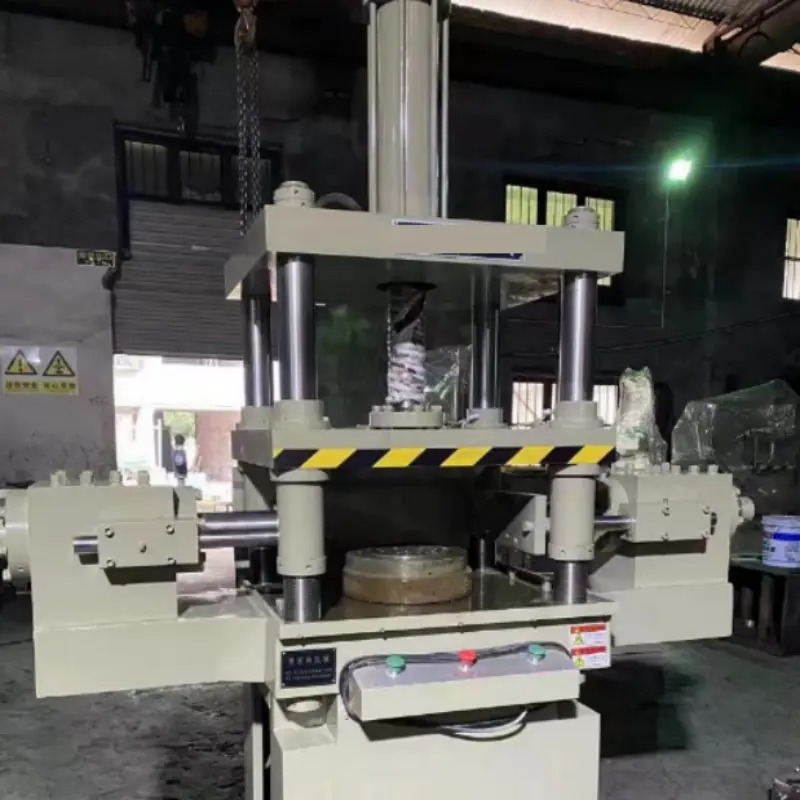
As the automotive industry continues to pursue higher productivity and consistent quality, manufacturers are increasingly investing in advanced wheel rim forming machine technology. Automation has transformed traditional wheel rim production by reducing manual intervention, shortening production cycles, and improving dimensional accuracy.
Compared with conventional equipment, an automated wheel rim forming machine combines intelligent control systems, precision forming technology, and stable mechanical performance to deliver faster production while maintaining high-quality standards. Whether producing rims for passenger cars, commercial vehicles, or agricultural machinery, automated solutions help manufacturers improve efficiency and remain competitive in today's market.
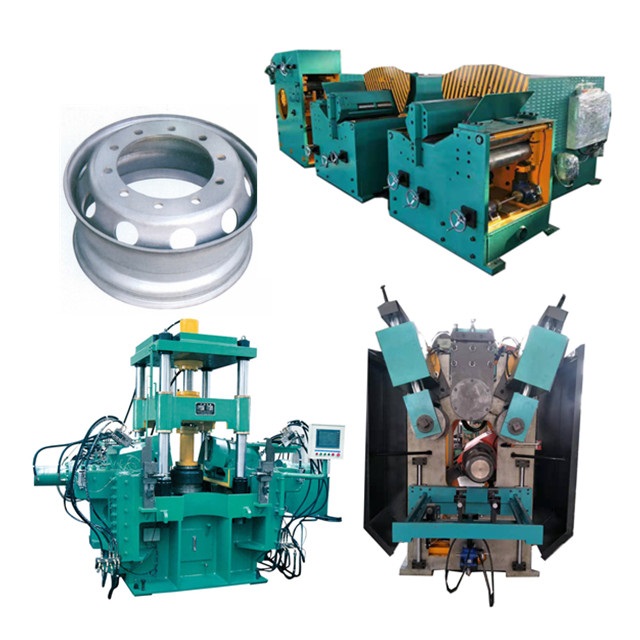
How Automation Improves Wheel Rim Forming Efficiency
Intelligent Process Control
One of the biggest advantages of an automated wheel rim forming machine is its intelligent control system. Modern machines use PLC and servo technology to precisely control roller movement, forming pressure, and spindle speed throughout the production process.
Instead of relying on manual adjustments, operators can simply select preset programs for different rim specifications. This minimizes human error, ensures consistent forming parameters, and significantly reduces setup time between production runs.
Faster Production Cycles
Automation allows a wheel rim forming machine to operate continuously with minimal interruption. Each forming stage is completed according to programmed parameters, eliminating unnecessary pauses caused by manual operation.
Servo-driven positioning also enables smooth transitions between forming operations, allowing manufacturers to increase hourly production capacity while maintaining stable product quality. For high-volume wheel production, these improvements contribute directly to lower manufacturing costs and shorter delivery times.
Consistent Forming Quality
Production speed should never come at the expense of quality. Automated control systems ensure every wheel rim forming machine follows the same forming sequence throughout continuous production.
Stable forming pressure and accurate positioning help maintain uniform rim dimensions, improve roundness, and reduce material waste. Consistent quality also simplifies downstream welding, machining, and assembly processes.
Key Features That Increase Production Speed
Servo-Controlled Forming System
Modern wheel rim forming machine equipment is equipped with servo-driven forming systems that provide precise control over roller movement. High positioning accuracy allows the machine to produce complex rim profiles while reducing vibration and improving surface finish.
Servo technology also enables faster response during production, contributing to shorter cycle times and greater operational efficiency.
Quick Changeover Between Rim Sizes
Wheel manufacturers often need to produce multiple rim specifications on the same production line. Automated machines simplify product changeovers by storing different processing parameters within the control system.
Operators can quickly switch between production programs without lengthy mechanical adjustments, reducing downtime and improving equipment utilization.
Automated Material Handling
Production efficiency depends not only on the forming process but also on material flow. An automated wheel rim forming machine can be integrated with feeding systems, conveyors, and unloading equipment to create a continuous manufacturing process.
By reducing manual handling between production stages, manufacturers can maintain stable production speeds while lowering labor requirements.
Benefits for Wheel Manufacturers
Investing in an automated wheel rim forming machine offers advantages beyond faster production. Higher automation levels help manufacturers improve overall operational performance through:
- Increased production capacity
- Consistent product quality
- Reduced labor dependence
- Lower material waste
- Faster product changeovers
- Improved equipment utilization
These benefits enable manufacturers to respond more efficiently to changing customer demands while maintaining reliable production quality.
For companies looking to expand production, automated equipment also provides greater flexibility for future capacity upgrades and new product development.
Choosing the Right Wheel Rim Forming Machine
Selecting the right wheel rim forming machine requires evaluating production capacity, rim size range, automation level, and future manufacturing plans. Machines with programmable controls, servo systems, and flexible tooling provide greater adaptability for different wheel specifications.
Manufacturers should also consider equipment reliability, maintenance requirements, and supplier technical support to ensure long-term production stability.
Conclusion
An automated wheel rim forming machine is an effective solution for manufacturers seeking to improve production speed without compromising quality. Through intelligent controls, servo-driven precision, and integrated automation, modern machines deliver faster cycle times, consistent forming accuracy, and greater production flexibility.
As demand for high-quality steel wheels continues to grow, investing in advanced wheel rim forming machine technology helps manufacturers increase efficiency, reduce operating costs, and strengthen their competitiveness in the global market.
FAQ
What is a wheel rim forming machine used for?
A wheel rim forming machine is used to shape steel wheel rims into their final profile through precision forming processes. It is widely applied in the production of passenger vehicle, truck, and agricultural wheels.
How does automation improve production speed?
Automation reduces manual operation by controlling the forming process through PLC and servo systems. This shortens cycle times, minimizes setup time, and improves production consistency.
Can one wheel rim forming machine produce different rim sizes?
Yes. Modern machines support multiple rim specifications through programmable controls and quick tooling adjustments, allowing manufacturers to switch production efficiently.
What are the main advantages of an automated wheel rim forming machine?
Key advantages include higher production efficiency, improved dimensional accuracy, lower labor costs, reduced material waste, and consistent product quality.
Is an automated wheel rim forming machine suitable for large-scale production?
Yes. Automated wheel rim forming machine systems are designed for continuous, high-volume manufacturing and can be integrated into complete wheel production lines to maximize productivity.
Table of Contents
- How Automation Improves Wheel Rim Forming Efficiency
- Key Features That Increase Production Speed
- Benefits for Wheel Manufacturers
- Choosing the Right Wheel Rim Forming Machine
- Conclusion
-
FAQ
- What is a wheel rim forming machine used for?
- How does automation improve production speed?
- Can one wheel rim forming machine produce different rim sizes?
- What are the main advantages of an automated wheel rim forming machine?
- Is an automated wheel rim forming machine suitable for large-scale production?