
 EN



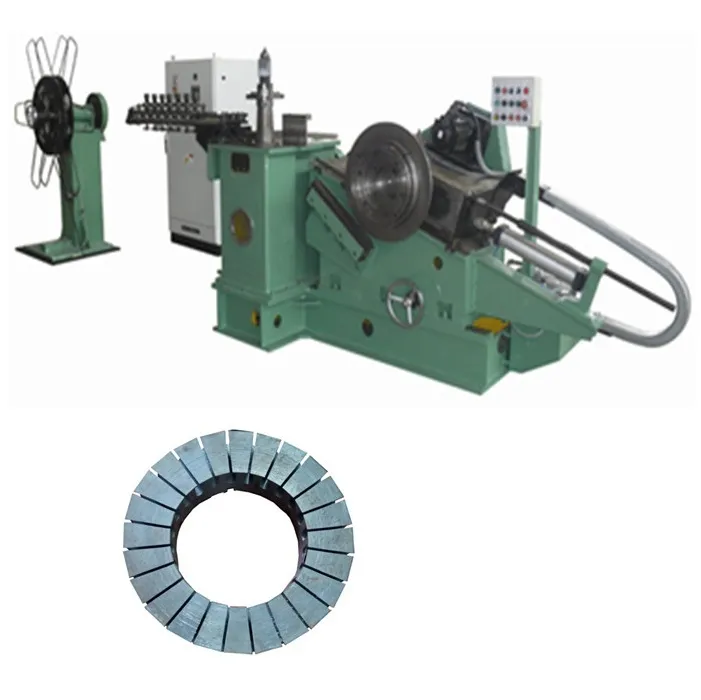
Electric vehicle manufacturers face unprecedented pressure to deliver motors with higher efficiency, compact designs, and cost-effective production. The axial flux motor stator lamination machine has emerged as a critical technology enabling this transformation. Unlike conventional radial flux designs, axial flux motors require specialized lamination and assembly equipment to achieve the precision tolerances necessary for peak performance. Understanding how an axial flux motor stator lamination machine operates, and why it matters for EV production, is essential for manufacturers seeking competitive advantage in the rapidly evolving electric vehicle market.
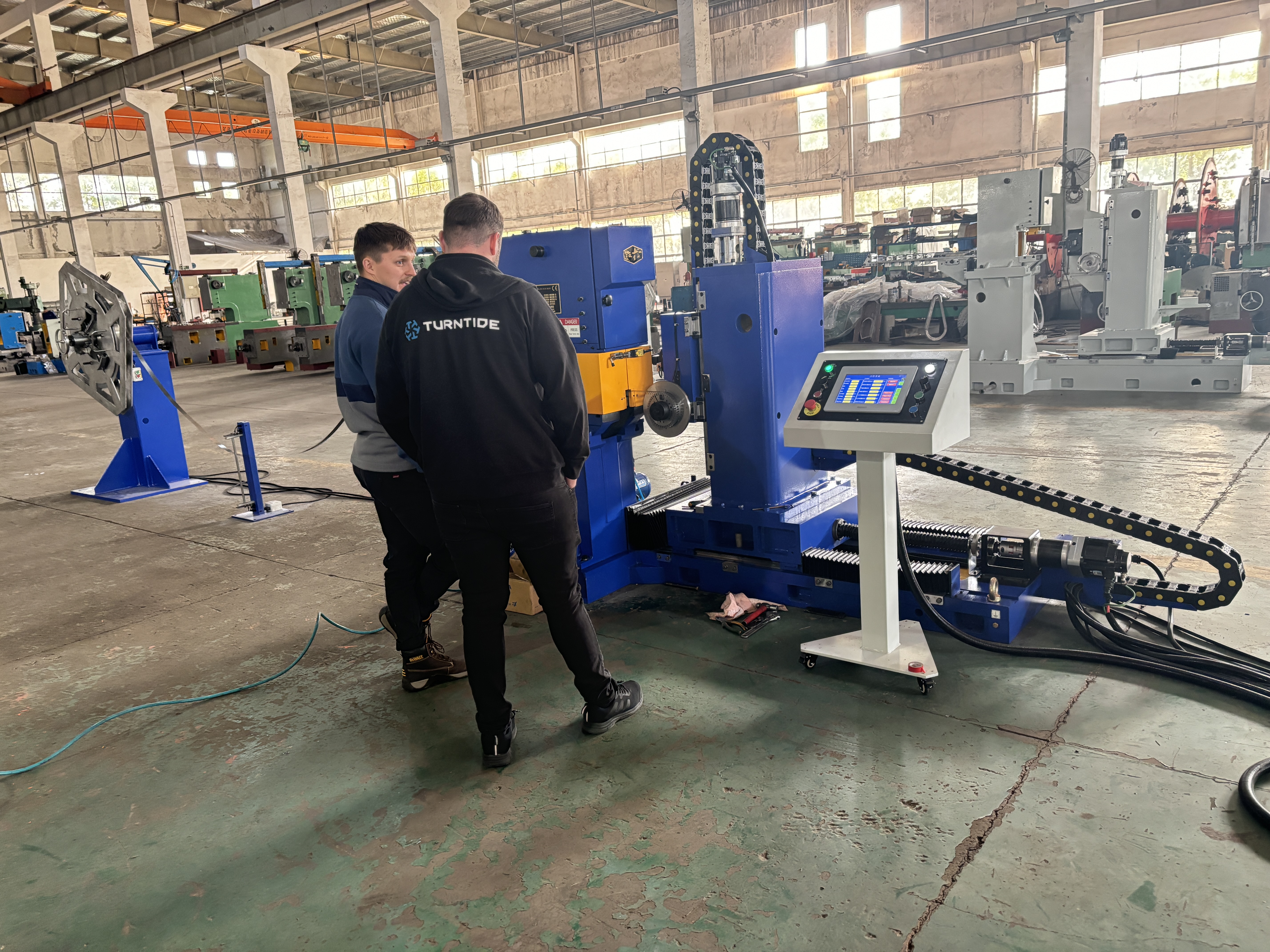
The axial flux motor stator lamination machine represents a significant advancement in motor manufacturing technology. This specialized equipment automates the precise stamping, notching, and stacking of laminated steel cores that form the stator. By delivering consistent dimensional accuracy and eliminating manual handling errors, an axial flux motor stator lamination machine directly improves motor efficiency, reduces waste, and accelerates production throughput. For EV manufacturers operating under tight timelines and stringent quality requirements, investing in advanced axial flux motor stator lamination machine systems is no longer optional—it is a prerequisite for maintaining production competitiveness.
Core Design Features of Axial Flux Motor Stator Lamination Machines
Precision Stamping and Notching Capabilities
The axial flux motor stator lamination machine delivers exceptional precision through servo-driven stamping and notching operations. Each lamination must be stamped with exact dimensional tolerances to ensure proper electromagnetic performance and mechanical fit within the motor assembly. The axial flux motor stator lamination machine employs high-speed servo presses that can achieve repeatability within microns, eliminating the dimensional drift common in mechanical press systems. This precision is critical because even minor variations in lamination geometry can create magnetic imbalances that reduce motor efficiency and increase noise and vibration in the final EV powertrain.
Advanced Material Handling and Stacking
Sophisticated material handling systems are integral to modern axial flux motor stator lamination machine design. The axial flux motor stator lamination machine automatically feeds, orients, and stacks laminations with minimal human intervention. Advanced vision systems and sensors continuously verify stack alignment and lamination orientation, ensuring the final stator core meets strict geometric requirements. This automation reduces labor costs, minimizes handling-induced damage, and enables consistent production of complex axial flux motor stator lamination machine outputs across multiple shifts and production runs.
Manufacturing Advantages and Production Efficiency
Enhanced Motor Performance Through Precision Lamination
When an axial flux motor stator lamination machine produces laminations with superior accuracy, the resulting stator cores exhibit lower iron losses and improved magnetic flux distribution. The axial flux motor stator lamination machine's precision directly translates into motors with higher torque density, better power output consistency, and improved thermal characteristics. For EV manufacturers, these performance improvements mean extended driving range, faster acceleration, and improved overall vehicle reliability. The axial flux motor stator lamination machine therefore serves as a foundational technology for meeting the demanding power and efficiency specifications that modern electric vehicle customers expect.
Waste Reduction and Cost Efficiency
An effective axial flux motor stator lamination machine minimizes scrap and material waste through precise cutting and consistent first-pass quality. Traditional manual lamination processes suffer from higher rejection rates, material handling damage, and rework expenses. The axial flux motor stator lamination machine significantly reduces these costs by delivering consistent output that requires minimal secondary finishing or rework. Furthermore, the axial flux motor stator lamination machine's high throughput capabilities allow manufacturers to meet production volume targets without proportionally increasing labor overhead, directly improving gross margins on EV motor production.
Integration and Future Developments in Axial Flux Motor Stator Lamination
Seamless Integration with Assembly Lines
Modern facilities require that an axial flux motor stator lamination machine integrate smoothly with downstream assembly and testing equipment. The axial flux motor stator lamination machine must output laminations that feed directly into automated stator winding, core insertion, and motor assembly stations. Advanced communication protocols and material tracking systems ensure that each lamination batch maintains full traceability throughout the manufacturing process. The axial flux motor stator lamination machine's role as the first critical link in the motor production chain means its uptime, reliability, and output quality directly determine overall facility throughput and product consistency.
Emerging Capabilities and Market Trends
The future of axial flux motor stator lamination machine technology includes enhanced automation, real-time quality monitoring, and integration with Industry 4.0 systems. Next-generation axial flux motor stator lamination machine platforms will incorporate artificial intelligence for predictive maintenance, advanced sensors for in-process quality verification, and cloud connectivity for remote monitoring and diagnostics. As EV production scales globally, manufacturers increasingly demand that an axial flux motor stator lamination machine deliver not just precision, but also flexibility to produce multiple motor configurations from a single platform, reducing equipment investment while maintaining manufacturing efficiency.
FAQ
What makes an axial flux motor stator lamination machine different from conventional lamination equipment?
An axial flux motor stator lamination machine is specifically engineered for the unique geometry and tolerances required by axial flux motor designs. Unlike radial flux lamination equipment, an axial flux motor stator lamination machine must handle different stamping patterns, maintain tighter stack alignment tolerances, and integrate with specialized downstream assembly processes. The axial flux motor stator lamination machine also requires advanced servo control and vision-guided positioning to ensure laminations stack perpendicular to the motor shaft with minimal run-out, a critical requirement for axial flux motor electromagnetic performance.
How does an axial flux motor stator lamination machine improve EV motor efficiency?
By delivering precisely dimensioned laminations, an axial flux motor stator lamination machine reduces magnetic iron losses and ensures optimal flux path distribution within the motor stator. An axial flux motor stator lamination machine's tight dimensional control minimizes air gaps and misalignment that would otherwise create magnetic field irregularities and heating. The result is a stator core that operates closer to its theoretical electromagnetic potential, directly improving motor efficiency metrics that translate into extended vehicle driving range and reduced battery consumption during operation.
What should manufacturers consider when selecting an axial flux motor stator lamination machine?
Manufacturers should evaluate an axial flux motor stator lamination machine based on throughput capacity, precision repeatability, material compatibility, maintenance requirements, and integration capability with existing production lines. The axial flux motor stator lamination machine must support the specific motor designs and lamination thicknesses required by the manufacturer's product roadmap. Additionally, consider whether an axial flux motor stator lamination machine offers flexibility to accommodate future product variations, technical support responsiveness, spare parts availability, and total cost of ownership over the equipment's operational lifetime.