
 EN



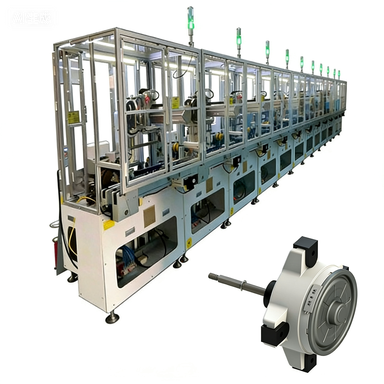
Heavy-duty BLDC motor winding machines represent a fundamental advancement in electric motor manufacturing, enabling factories to produce high-performance brushless direct current motors with unmatched precision and consistency. These specialized BLDC motor winding machines automate the intricate process of wrapping copper wire around stator cores, a task that directly impacts motor efficiency, torque output, and operational lifespan. Industrial-grade BLDC motor winding machines have become indispensable for manufacturers targeting commercial-grade, aerospace-grade, and automotive-grade applications where quality cannot be compromised.
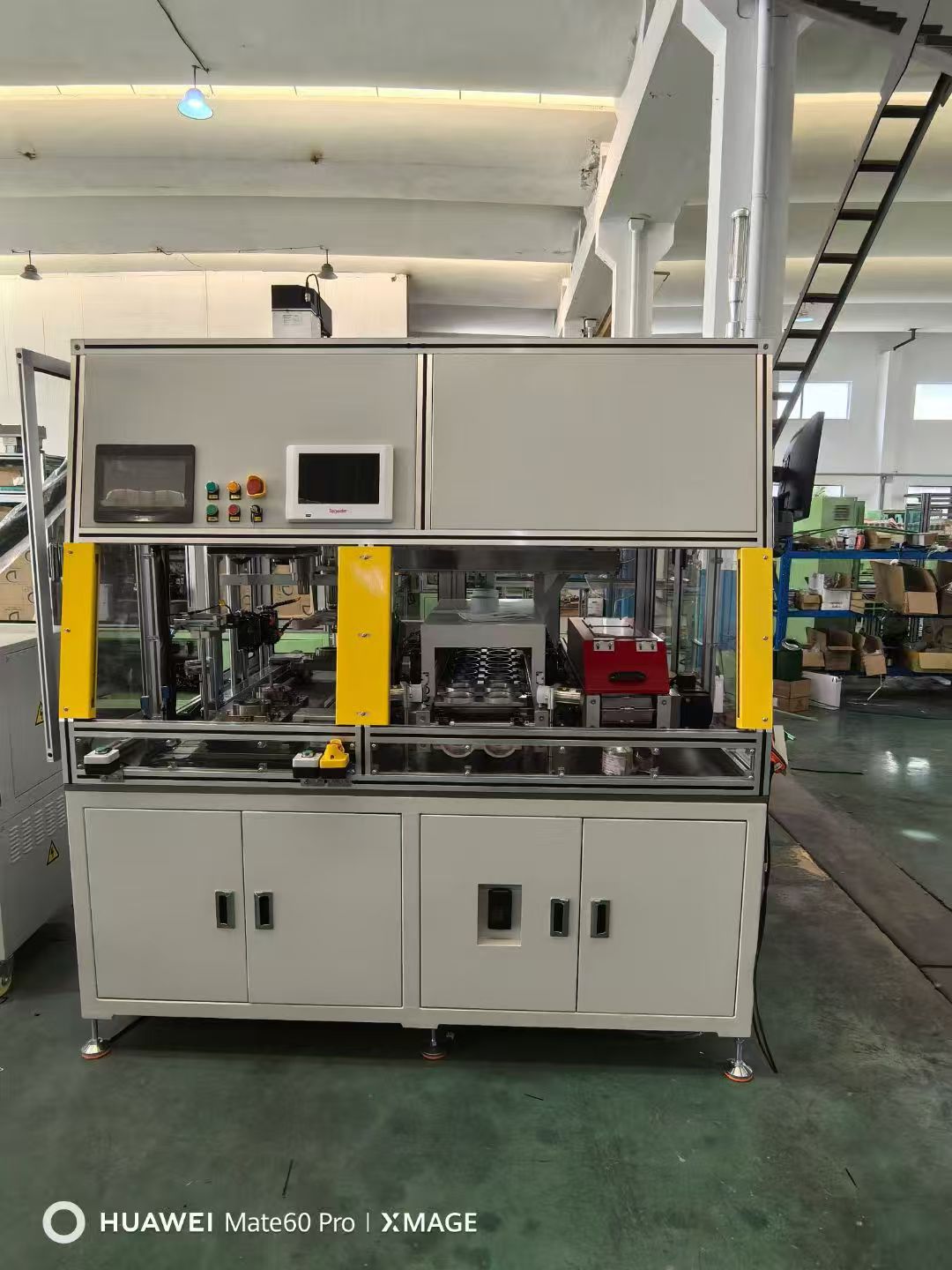
Modern BLDC motor winding machines combine mechanical precision with digital control systems to achieve winding accuracies within micrometers, ensuring that every motor meets strict performance specifications. The transition from manual winding to automated BLDC motor winding machines has revolutionized production capacity, reducing labor costs while eliminating human error that previously plagued quality control. Today, manufacturers across industries recognize that investing in robust BLDC motor winding machines is essential for maintaining competitive advantage in an increasingly demanding global marketplace.
Core Engineering Specifications of BLDC Motor Winding Machines
Precision Winding Capabilities and Accuracy Standards
Advanced BLDC motor winding machines deliver consistent wire placement with positional tolerances as tight as ±0.05 millimeters, a precision level that manual operators cannot reliably achieve across production runs. Heavy-duty BLDC motor winding machines employ closed-loop feedback systems, servo-driven spindles, and laser-guided positioning mechanisms to guarantee that each coil maintains identical geometry and electrical resistance. This level of accuracy directly translates to motors with superior electromagnetic balance, reduced vibration, and extended operational life—critical factors in industrial applications where downtime costs thousands of dollars per hour.
Production Speed and Throughput Optimization
Industrial BLDC motor winding machines can complete complex multi-phase windings in under two minutes per motor, a throughput that would require hours of manual labor. High-capacity BLDC motor winding machines process hundreds of motors daily without mechanical degradation or accuracy loss, thanks to reinforced bearings, precision spindle assemblies, and thermally managed motor drive systems. For manufacturers operating in high-volume markets such as electric vehicle production, consumer appliances, and industrial automation, speed and reliability of BLDC motor winding machines directly determine facility profitability and market responsiveness.
Key Technical Features That Define Industrial-Grade BLDC Motor Winding Machines
Multi-Phase Winding Flexibility and Adaptability
Heavy-duty BLDC motor winding machines accommodate varying phase configurations—single-phase, three-phase, and custom multi-phase designs—through programmable logic controllers and interchangeable wire guides. The best BLDC motor winding machines include quick-change tooling systems that allow operators to reconfigure machines for different motor specifications in less than fifteen minutes, minimizing production delays when switching between product variants. This flexibility enables manufacturers to serve diverse customer specifications without maintaining separate production lines, a capability that directly improves asset utilization and reduces capital expenditure.
Wire Management and Tension Control Systems
Sophisticated BLDC motor winding machines feature automatic wire tensioning systems that maintain consistent pulling force throughout each winding cycle, preventing slack loops and insulation damage that compromise motor performance. Real-time tension monitoring on modern BLDC motor winding machines adjusts automatically based on wire gauge, material properties, and winding speed, protecting delicate copper windings while maintaining winding density that meets electrical specifications. Advanced sensors embedded in professional BLDC motor winding machines detect wire breaks instantaneously, triggering automatic shutdown to prevent defective motor production and scrap material waste.
Operational Integration and Manufacturing Workflow Benefits
CNC Integration and Digital Process Control
Contemporary BLDC motor winding machines integrate seamlessly with computer numerical control systems, allowing operators to input motor specifications directly into manufacturing execution systems that auto-configure all winding parameters. CNC-capable BLDC motor winding machines store hundreds of motor design profiles in memory, enabling instant recall when production shifts to different motor types without manual recalibration. This digital integration reduces setup time, minimizes human operator training requirements, and creates detailed production records that support quality traceability and root-cause analysis when defects occur.
Maintenance Requirements and Operational Longevity
Heavy-duty BLDC motor winding machines constructed from hardened steel components and sealed bearing assemblies typically deliver ten to fifteen years of continuous service with predictable maintenance intervals. Regular maintenance of BLDC motor winding machines involves spindle lubrication, guide rail inspection, and servo calibration—routine procedures that manufacturing staff can complete without specialized technician intervention. Manufacturers who maintain BLDC motor winding machines according to equipment specifications report consistent accuracy and minimal unplanned downtime, protecting production schedules and inventory levels.
FAQ
What distinguishes heavy-duty BLDC motor winding machines from standard winding equipment?
Heavy-duty BLDC motor winding machines incorporate reinforced mechanical frameworks, precision servo drives, advanced feedback sensors, and industrial-grade control systems designed for continuous 24/7 operation in demanding manufacturing environments. Standard winding equipment often lacks these robustness features and cannot sustain the production volumes or maintain the accuracy standards required for industrial-grade BLDC motors. Heavy-duty BLDC motor winding machines represent a significant capital investment but deliver superior return-on-investment through reduced scrap rates, extended equipment lifespan, and higher market value of finished motors.
How do BLDC motor winding machines improve motor performance compared to manual winding?
BLDC motor winding machines eliminate the human inconsistencies that create coil-to-coil variations in copper placement, wire tension, and phase geometry, resulting in motors with uniform electromagnetic properties. Motors wound by precision BLDC motor winding machines exhibit significantly lower cogging torque, reduced acoustic noise, and improved power factor compared to manually wound alternatives. These performance improvements translate directly into customer satisfaction, reduced warranty claims, and competitive pricing power in markets where motor efficiency directly impacts end-user operating costs.
What production volume justifies investment in BLDC motor winding machines?
Manufacturers producing more than five thousand motors annually typically achieve positive return-on-investment within three years of implementing BLDC motor winding machines, considering labor cost reduction and scrap rate improvement. Operations producing ten thousand or more motors yearly generate payback periods of twelve to eighteen months, making BLDC motor winding machines economically essential for volume producers. Even smaller manufacturers producing specialized high-value motors often justify BLDC motor winding machines through quality premiums and superior market differentiation, regardless of absolute production volumes.