
 EN



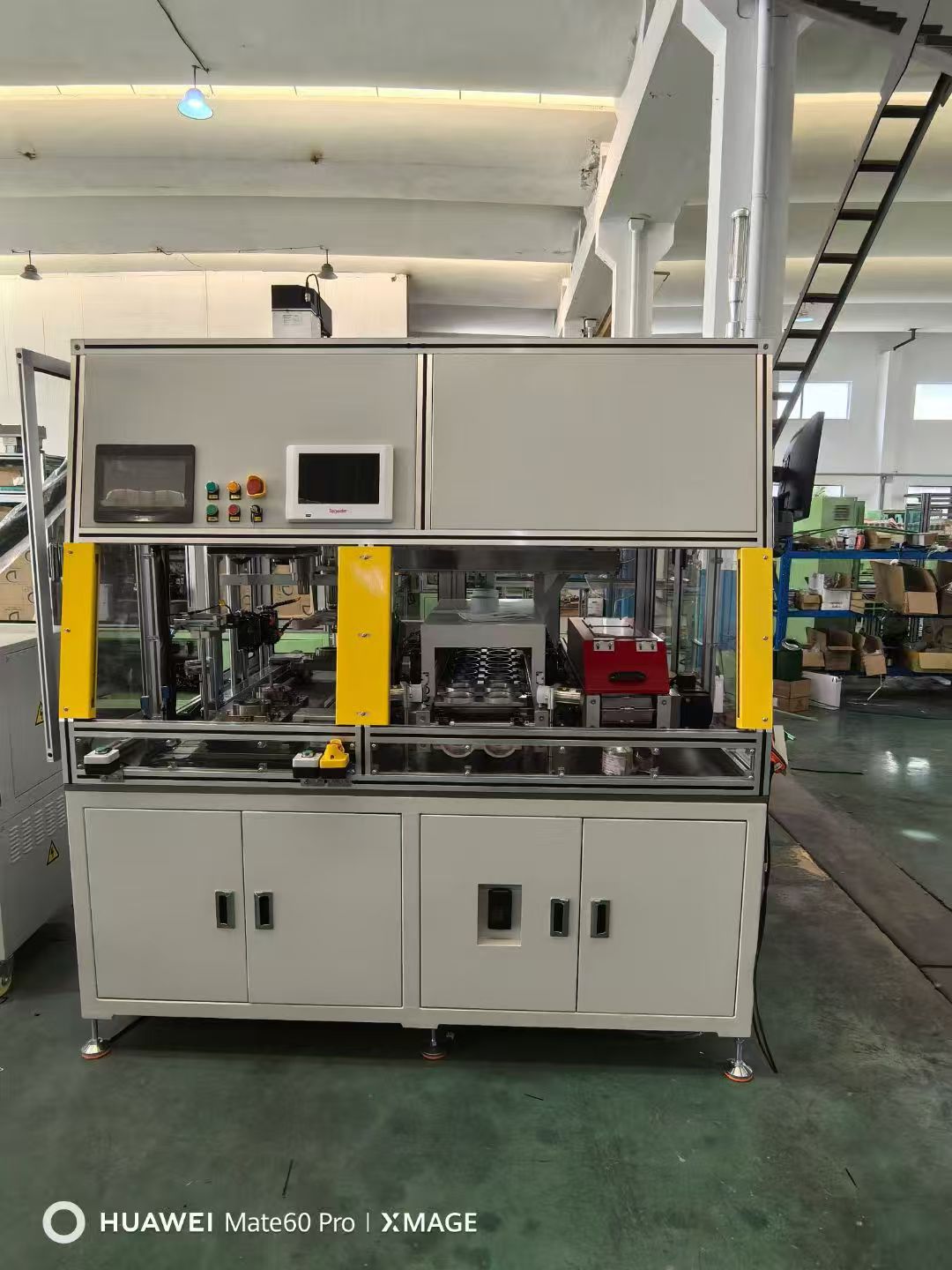
Electric vehicle manufacturing demands precision, efficiency, and scalability at every production stage. Among the most critical operations is the winding of stator coils, where quality directly impacts motor performance and vehicle reliability. BLDC motor winding machines represent a technological leap in automating this complex process, enabling manufacturers to produce consistent, high-quality motor components at industrial scale. The integration of BLDC motor winding machines into EV production lines has become essential for meeting demand while maintaining strict performance standards.
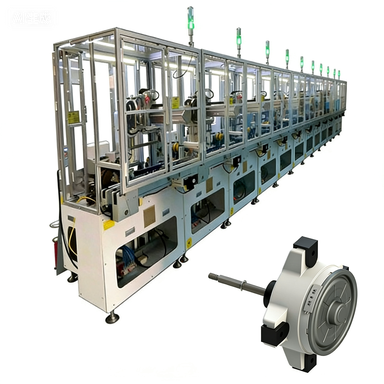
The market for electric vehicles continues to expand rapidly, and with it comes intense pressure on motor manufacturers to deliver components faster and more cost-effectively. BLDC motor winding machines address this challenge by automating repetitive winding tasks, reducing labor costs, minimizing human error, and increasing throughput per production cycle. Understanding how BLDC motor winding machines function and why they matter for EV projects is crucial for anyone involved in motor manufacturing, procurement, or supply chain management.
Core Capabilities of BLDC Motor Winding Machines
Precision Coil Formation and Consistency
BLDC motor winding machines are engineered to wind wire into coils with extraordinary precision and repeatability. Each coil produced by advanced BLDC motor winding machines maintains identical dimensions, wire tension, and layer alignment, eliminating the variability inherent in manual winding. For EV motors operating at high speeds and demanding strict electromagnetic properties, this consistency translates directly into predictable motor performance and reduced failure rates in the field.
Modern BLDC motor winding machines feature programmable winding algorithms that adapt to different coil geometries, wire gauges, and slot configurations. This flexibility allows a single BLDC motor winding machines system to handle multiple motor designs without extensive retooling, making it ideal for manufacturers producing diverse EV powertrains or working with variable customer specifications.
Speed and Production Scalability
The throughput of BLDC motor winding machines far exceeds manual production capabilities, enabling manufacturers to scale output without proportionally increasing labor. Depending on the motor design and coil complexity, industrial-grade BLDC motor winding machines can produce dozens of complete stator assemblies per hour. This speed is particularly valuable in the EV sector, where production ramp-up is aggressive and supply chain demands are unforgiving.
Implementing BLDC motor winding machines into an existing production line reduces manufacturing bottlenecks and allows companies to meet quarterly production targets without excessive overtime or facility expansion. The cost per unit winding decreases significantly as BLDC motor winding machines scale volume, directly improving profit margins on EV motor sales.
Integration into Electric Vehicle Manufacturing Workflows
Compatibility with Existing Production Systems
BLDC motor winding machines must integrate seamlessly into comprehensive manufacturing ecosystems that include lamination stamping, slot insertion, winding, wedging, and final assembly. Advanced BLDC motor winding machines feature modular designs and standardized interfaces that connect easily to automated material handling systems and quality control stations. This interoperability ensures that BLDC motor winding machines become enablers of continuous flow manufacturing rather than isolated process islands.
Quality data generated by BLDC motor winding machines—including winding tension, wire position, layer count, and fault detection—feeds directly into real-time production monitoring systems. This integration allows manufacturers to track motor quality metrics across the entire assembly line and identify issues before motors enter testing or customer hands.
Automation Benefits for EV Supply Chains
Electric vehicle manufacturers operate in a highly competitive environment where cost control and delivery reliability are paramount. Deploying BLDC motor winding machines reduces dependency on skilled manual labor, which is often scarce in high-volume manufacturing regions. Additionally, BLDC motor winding machines operate continuously without fatigue, supporting night shifts and weekend production schedules that drive overall factory utilization rates upward.
The labor cost savings from BLDC motor winding machines allocation often justify capital investment within eighteen to thirty-six months, depending on production volume and wage rates. Beyond financial return, BLDC motor winding machines improve workplace safety by removing personnel from repetitive, physically demanding tasks and positioning them in higher-value roles such as maintenance, programming, and quality oversight.
Technical Specifications and Selection Criteria
Key Performance Indicators for EV Applications
When evaluating BLDC motor winding machines for electric vehicle production, manufacturers must assess multiple technical parameters. Wire diameter range, maximum winding speed, available slot configurations, programming flexibility, and built-in quality sensors are fundamental differentiators among BLDC motor winding machines available in the market. Many advanced BLDC motor winding machines incorporate vision systems and real-time monitoring to detect winding faults instantly, preventing defective coils from progressing to subsequent assembly stages.
The precision capability of BLDC motor winding machines—often measured in microns for wire positioning—directly influences the final motor's efficiency and thermal performance. EV motors must operate at high efficiency to maximize driving range, making precision winding a critical value driver. BLDC motor winding machines engineered for automotive applications typically maintain tolerances far tighter than general industrial winding equipment.
Material Handling and Sustainability Considerations
Modern BLDC motor winding machines are designed with material efficiency in mind, minimizing wire waste through precise tension control and optimized programming. Sustainable manufacturing is increasingly important to EV producers seeking to reduce environmental impact across supply chains. BLDC motor winding machines contribute to this goal by reducing scrap rates and enabling efficient recycling of unused wire and coil trimmings.
The footprint of advanced BLDC motor winding machines has also become more compact, allowing manufacturers to maximize production density in facilities with space constraints. This spatial efficiency, combined with lower energy consumption per winding cycle compared to legacy equipment, makes modern BLDC motor winding machines an environmentally responsible choice for scaling EV motor production.
FAQ
What makes BLDC motor winding machines essential for EV manufacturing?
BLDC motor winding machines are essential because they deliver the precision, speed, and consistency required for producing high-quality motor stators at scale. Electric vehicles demand motors with tight electromagnetic specifications to achieve target efficiency and performance targets. BLDC motor winding machines automate the most complex and labor-intensive portion of motor assembly, directly enabling EV manufacturers to meet aggressive production schedules while maintaining quality and controlling costs in a highly competitive market.
How do BLDC motor winding machines improve production efficiency?
BLDC motor winding machines increase efficiency through continuous operation without human fatigue, reduced setup time between different motor designs, and elimination of rework caused by manual winding variability. A single operator can oversee multiple BLDC motor winding machines simultaneously, dramatically reducing labor per motor produced. The automatic detection of winding faults by integrated sensors in advanced BLDC motor winding machines prevents defective coils from entering later stages, reducing overall scrap rates and rework time.
What return on investment can manufacturers expect from BLDC motor winding machines?
The ROI for BLDC motor winding machines varies based on production volume, local labor rates, motor complexity, and equipment specifications, but most industrial installations achieve payback within two to three years. High-volume EV motor manufacturers see faster ROI because BLDC motor winding machines cost savings scale proportionally with output. Beyond direct labor savings, BLDC motor winding machines reduce defects, scrap, and rework, generating additional financial benefits that often accelerate the break-even point further.