
 EN



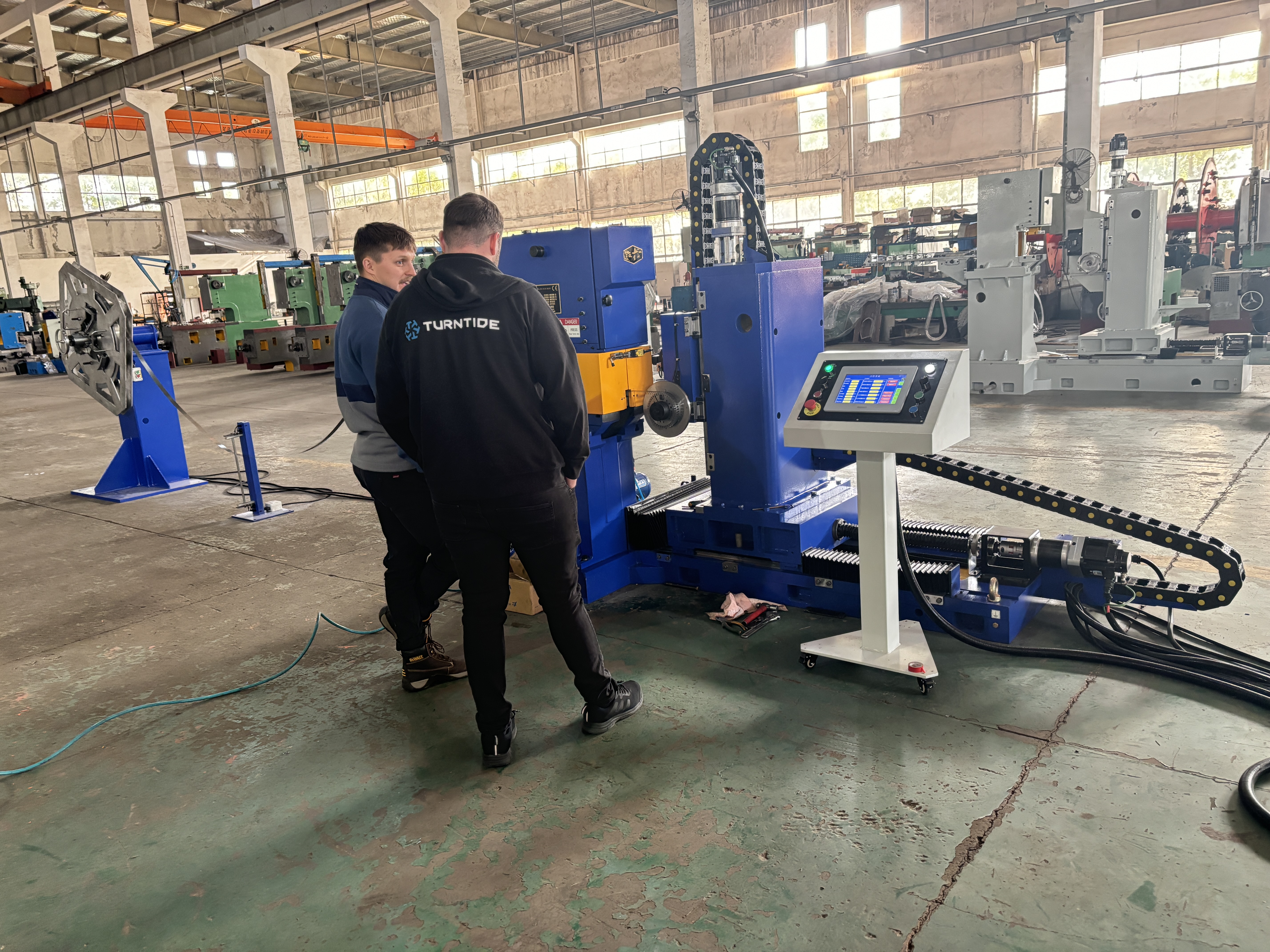
The axial flux motor stator lamination machine represents a transformative advancement in electric motor manufacturing, directly addressing the critical need for higher torque density and improved efficiency in modern industrial applications. As industries demand more compact motors with superior performance characteristics, the axial flux motor stator lamination machine has emerged as the precision tool that makes this possible. Unlike traditional radial flux designs, axial configurations require specialized machinery to achieve the exact lamination geometry necessary for optimal magnetic flux distribution and torque generation.
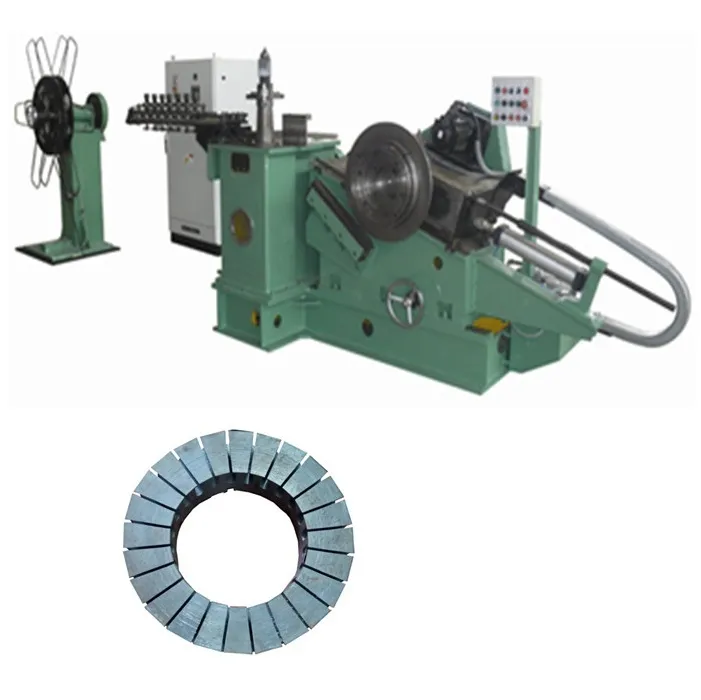
The engineering challenge behind maximizing motor torque lies in achieving consistent lamination quality, precise notching, and accurate stacking alignment. An axial flux motor stator lamination machine addresses these challenges by automating the critical manufacturing stages that directly influence torque performance. The machine's servo-driven precision ensures that each lamination segment meets exact specifications, reducing losses and enabling higher magnetic force concentration within the motor's active region.
Understanding Axial Flux Motor Stator Lamination Requirements
Core Design Principles of Axial Flux Motors
Axial flux motor stator lamination machine technology builds upon fundamental electromagnetic principles that differ significantly from radial machines. In an axial flux configuration, magnetic flux flows parallel to the motor's rotation axis rather than perpendicular to it. This geometry allows for a more compact footprint while delivering exceptional torque density. The axial flux motor stator lamination machine must therefore produce laminations with precise dimensions and surface finishes that maintain magnetic integrity across the entire stack.
The stator laminations in an axial flux design experience unique magnetic stress patterns. The axial flux motor stator lamination machine counteracts these stresses by maintaining exact thickness tolerances, usually within 0.05 to 0.1 millimeters. Even minor deviations can cause magnetic saturation or uneven flux distribution, reducing torque output and increasing heat generation. Manufacturers rely on advanced axial flux motor stator lamination machine systems to guarantee that every lamination contributes optimally to torque generation.
Material Selection and Lamination Standards
The choice of lamination material directly impacts an axial flux motor stator lamination machine's ability to produce high-performance stators. Premium silicon steel grades, typically containing 2 to 3.5 percent silicon, exhibit superior magnetic properties and reduced core losses. An axial flux motor stator lamination machine must handle these materials consistently, avoiding mechanical damage or thermal distortion during processing. The machine's precision notching and punching capabilities ensure that material properties remain intact throughout the manufacturing process.
Quality standards for an axial flux motor stator lamination machine output include stringent requirements for surface roughness, dimensional accuracy, and magnetic permeability. Modern machines equipped with servo controls and automated quality feedback systems monitor each lamination's specifications in real-time. This approach ensures that the axial flux motor stator lamination machine produces stators capable of delivering consistent, repeatable torque performance across entire production batches.
How Axial Flux Motor Stator Lamination Machines Enhance Torque Output
Precision Notching and Flux Path Optimization
Torque generation in electric motors depends critically on efficient magnetic flux paths and precise copper wire placement within stator slots. The axial flux motor stator lamination machine creates exact slot geometries through servo-driven notching operations that maintain consistent angles, depths, and widths. These precise geometries allow winding engineers to place conductors optimally, minimizing air gaps and maximizing the magnetic field's interaction with rotor magnets. Superior notching precision directly translates to higher torque per unit volume.
The axial flux motor stator lamination machine's capability to execute complex geometries enables engineers to design advanced slot configurations that enhance torque delivery. Variable-width slots, optimized conductor cross-sections, and strategically placed flux barriers all require precision manufacturing that only a dedicated axial flux motor stator lamination machine can reliably deliver. These design innovations combine with the machine's manufacturing accuracy to produce stators that achieve breakthrough torque density improvements.
Reduced Magnetic Losses Through Precise Lamination
Core losses in electric motors consist primarily of eddy current losses and hysteresis losses, both of which reduce available torque and increase operating temperatures. An axial flux motor stator lamination machine minimizes these losses by maintaining precise lamination thickness and ensuring clean, burr-free edges that prevent magnetic bridging between laminations. Each lamination produced by the axial flux motor stator lamination machine functions as an independent magnetic pathway, preventing circulating currents that would otherwise waste energy.
The servo-controlled nature of modern axial flux motor stator lamination machine systems enables dynamic adjustments during production, compensating for material variations and wear patterns. This adaptive control ensures that laminations remain within specification throughout extended production runs. Consequently, the axial flux motor stator lamination machine produces stators with uniformly low core losses, enabling motors to deliver higher torque output while maintaining cooler operating temperatures and improved reliability.
Manufacturing Integration and Performance Impact
Automated Production Workflow Integration
Modern manufacturing environments demand high-speed, reliable production of electric motor components. The axial flux motor stator lamination machine integrates seamlessly into automated assembly lines, processing laminations at rates exceeding 3,000 to 5,000 units per hour depending on complexity. This high throughput, combined with the machine's precision capabilities, enables manufacturers to produce large volumes of consistent, high-quality stators. The axial flux motor stator lamination machine's automated quality control systems flag dimensional deviations immediately, preventing defective parts from entering downstream assembly processes.
The integration of an axial flux motor stator lamination machine within a complete motor manufacturing ecosystem creates synergistic efficiency gains. Precise laminations eliminate rework requirements, reduce scrap rates, and minimize assembly labor associated with fitting or repairing misaligned components. Over extended production cycles, these efficiency improvements compound, substantially reducing the cost per unit while maintaining unwavering quality standards that directly support superior motor performance.
Quality Assurance and Consistency
Consistency in lamination quality directly determines whether an electric motor will reliably deliver its designed torque specification across its operational lifetime. An axial flux motor stator lamination machine equipped with advanced feedback sensors continuously monitors critical parameters including lamination thickness, notch geometry, surface finish, and material properties. This data-driven quality assurance approach identifies trends before they result in out-of-specification parts, enabling predictive maintenance that keeps the axial flux motor stator lamination machine operating at peak performance.
Manufacturers using a professional-grade axial flux motor stator lamination machine achieve dramatically improved consistency metrics compared to semi-manual or older automated approaches. Statistical process control data collected from axial flux motor stator lamination machine operations demonstrates that precision machines reduce dimensional variation by 40 to 60 percent compared to conventional methods. This consistency translates directly to motors that deliver predictable, repeatable torque characteristics, meeting customer expectations and reducing field failures.
FAQ
What specific torque improvements can manufacturers expect from upgrading to an axial flux motor stator lamination machine?
Upgrading to a dedicated axial flux motor stator lamination machine typically enables torque density improvements of 15 to 35 percent compared to conventionally manufactured stators. These gains result from the machine's ability to achieve tighter dimensional tolerances, optimize slot geometries, and reduce core losses through precision manufacturing. The exact improvement magnitude depends on the baseline manufacturing process, motor design specifications, and the specific capabilities of the axial flux motor stator lamination machine deployed. Motors manufactured with improved laminations consistently outperform predecessors in both peak torque and sustained torque delivery under continuous operation.
How does an axial flux motor stator lamination machine contribute to reducing overall motor production costs?
An axial flux motor stator lamination machine reduces production costs through multiple mechanisms including reduced scrap rates, minimized rework, faster processing speeds, and improved first-pass quality. The machine's precision eliminates dimensional rejections and assembly complications that consume labor and delay production. Over annual production volumes, the cumulative cost savings from operating an axial flux motor stator lamination machine frequently justify the capital investment within two to three years. Additionally, producing superior-quality stators reduces warranty claims and field service costs, extending the financial benefits beyond the manufacturing floor.
Are there specific industries where axial flux motor stator lamination machine technology delivers exceptional value?
Industries including electric vehicle drivetrains, renewable energy generation, industrial automation, aerospace applications, and compact marine propulsion systems particularly benefit from axial flux motor stator lamination machine technology. These sectors prioritize torque density, efficiency, and reliability in compact motor designs that are difficult or impossible to achieve with conventional manufacturing methods. An axial flux motor stator lamination machine enables engineers to design motors meeting these demanding requirements while maintaining manufacturing feasibility and cost competitiveness. The technology's value becomes especially apparent in applications where space constraints combine with performance demands that push conventional motor designs beyond practical limits.
Table of Contents
- Understanding Axial Flux Motor Stator Lamination Requirements
- How Axial Flux Motor Stator Lamination Machines Enhance Torque Output
- Manufacturing Integration and Performance Impact
-
FAQ
- What specific torque improvements can manufacturers expect from upgrading to an axial flux motor stator lamination machine?
- How does an axial flux motor stator lamination machine contribute to reducing overall motor production costs?
- Are there specific industries where axial flux motor stator lamination machine technology delivers exceptional value?