
 EN



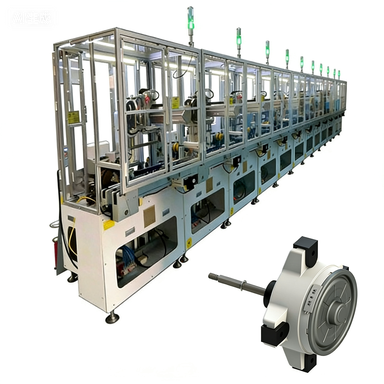
Drone manufacturers face mounting pressure to produce high-performance electric motors with exceptional precision and consistency. BLDC motor winding machines have emerged as the critical technology enabling this level of manufacturing excellence. These specialized systems automate the complex process of winding copper wire onto motor stators, eliminating manual inconsistencies while dramatically improving production throughput. For manufacturers seeking to scale drone motor production without sacrificing quality, understanding BLDC motor winding machines is essential to competitive advantage in this rapidly evolving market.
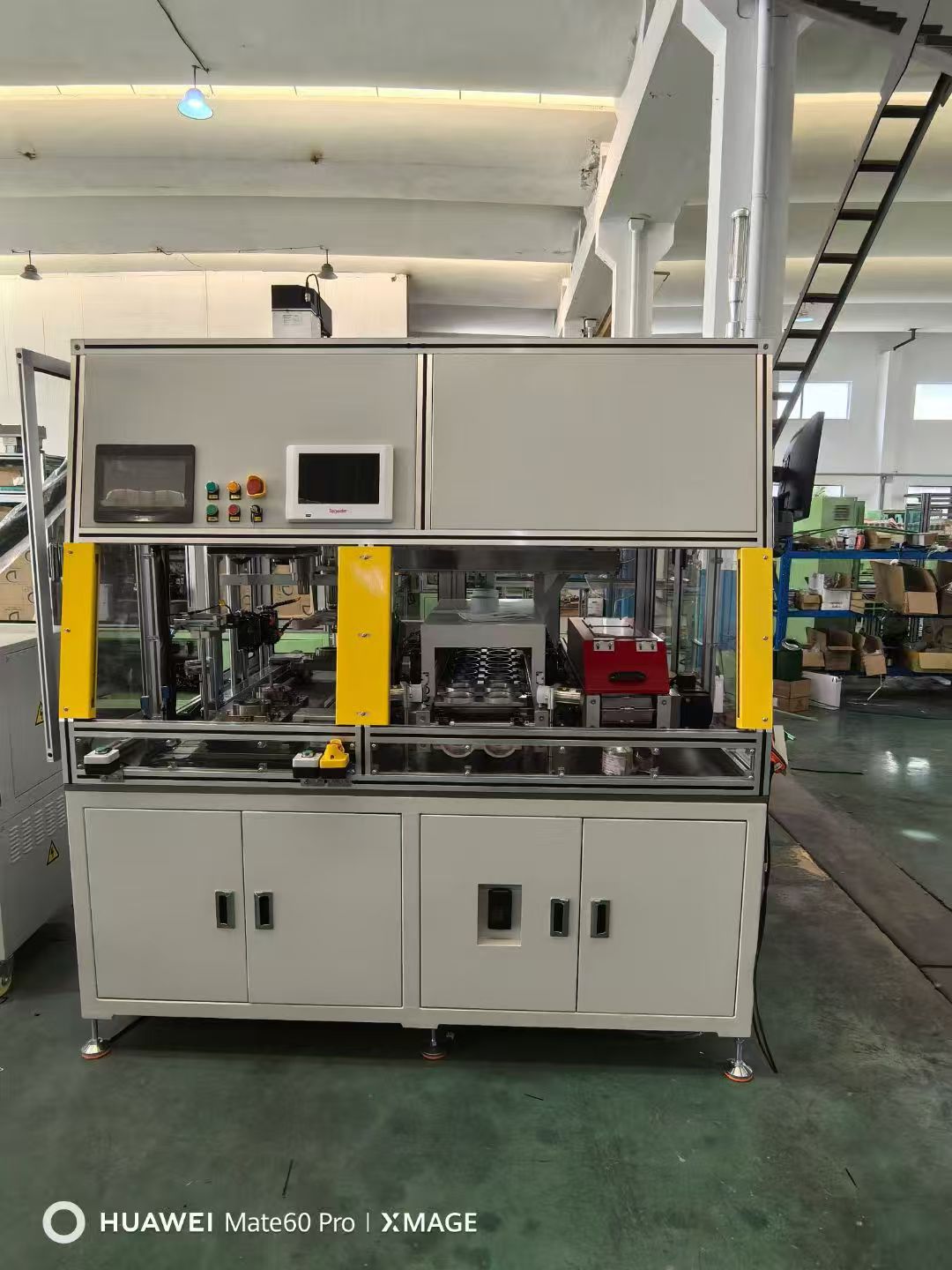
The drone industry demands motors that deliver optimal torque-to-weight ratios, rapid acceleration response, and reliable operation across demanding flight conditions. BLDC motor winding machines provide the precision control necessary to achieve these performance characteristics by ensuring every coil is wound to exact specifications. Modern BLDC motor winding machines incorporate programmable logic controllers and advanced sensor feedback systems that maintain consistent wire tension, precise layer placement, and accurate turn counts. This technological foundation transforms motor fabrication from a labor-intensive craft into a reproducible, scalable manufacturing process that supports both rapid prototyping and high-volume production.
The Core Technology Behind BLDC Motor Winding Machines
Automated Coil Winding Precision
BLDC motor winding machines operate by automatically feeding copper wire through rotating spindles and guiding it onto motor stator forms with micron-level accuracy. The winding process requires precise coordination between wire tension control, spindle rotation speed, and wire guide positioning to create uniform coils that meet exact turn-count specifications. Advanced BLDC motor winding machines feature multi-axis servo systems that enable complex winding patterns, including distributed winding configurations that optimize magnetic field distribution and reduce cogging torque. This level of automation eliminates the fatigue-related inconsistencies that occur with manual winding, resulting in motor batches with dramatically improved performance uniformity and reliability metrics.
The integration of real-time monitoring systems into BLDC motor winding machines enables immediate detection of wire breaks, tension anomalies, or geometry deviations. Operators receive instant feedback when winding parameters drift outside acceptable tolerances, allowing corrective action before defective coils progress through assembly. This automated quality control capability reduces scrap rates and rework costs while simultaneously ensuring that only conforming coils enter the subsequent assembly stages of drone motor production.
Wire Tension and Layer Management
Maintaining consistent wire tension throughout the winding cycle represents one of the critical challenges that BLDC motor winding machines must solve. Improper tension produces loose coils that shift during motor operation, leading to premature winding failure and unpredictable performance variation. High-quality BLDC motor winding machines employ precision tension control systems with load cells and proportional-integral-derivative feedback loops that maintain wire tension within tight operational windows. This sophisticated control ensures that each layer of wire wound by BLDC motor winding machines sits perfectly against the previous layer without crushing or deforming the copper insulation.
Layer management capabilities in modern BLDC motor winding machines enable sophisticated winding sequences that accommodate multi-pole motor designs commonly used in drone applications. The machine automatically manages wire guide transitions between layers, calculates appropriate spacing based on wire diameter and slot geometry, and executes complex patterns that would be virtually impossible to replicate manually. This precision capability allows drone manufacturers to implement winding designs optimized specifically for their target thrust and power requirements.
Operational Advantages for Drone Motor Manufacturing
Production Efficiency and Scalability
BLDC motor winding machines dramatically accelerate production cycles compared to manual winding processes. A single machine operator can oversee multiple BLDC motor winding machines simultaneously, significantly reducing per-unit labor costs while increasing total throughput. Modern BLDC motor winding machines complete a single stator in 15 to 45 seconds depending on coil count and wire gauge, enabling drone manufacturers to produce thousands of motors weekly from a relatively compact factory footprint. This efficiency advantage becomes increasingly valuable as drone demand expands across commercial delivery, surveillance, agricultural, and industrial inspection applications.
The investment in BLDC motor winding machines typically achieves payback within 12 to 24 months for manufacturers producing more than 500 drone motors monthly. Beyond the initial payback period, these machines generate substantial margin expansion by converting labor-intensive manual winding into a capital-efficient automated process. Drone manufacturers expanding production capacity find that adding BLDC motor winding machines represents a far more cost-effective scaling approach than expanding manual labor teams, particularly in high-wage markets where skilled winding labor commands premium compensation.
Quality Consistency and Performance Optimization
BLDC motor winding machines enable performance consistency that manual winding cannot achieve, a critical advantage in drone applications where motor reliability directly impacts flight safety and mission success. Every motor produced by BLDC motor winding machines exhibits identical resistance characteristics, inductance values, and back-EMF profiles when properly calibrated. This consistency permits drone engineers to implement control algorithms with tighter performance margins, extracting maximum efficiency from battery energy and extending flight duration by measurable percentages. Drone manufacturers competing on endurance specifications increasingly recognize that BLDC motor winding machines provide a manufacturing foundation that manual processes simply cannot match.
The ability to reprogram BLDC motor winding machines for different motor specifications enables manufacturers to serve diverse customer segments without requiring entirely separate production equipment. A single machine can produce 2-pole, 4-pole, or 6-pole configurations by adjusting winding sequences and turn counts. This flexibility supports market responsiveness and allows manufacturers to quickly adapt production to emerging drone categories or customer specifications without capital-intensive retooling investments.
Implementation Considerations for Drone Manufacturers
Technical Integration and Operator Training
Successfully deploying bldc motor winding machines requires careful attention to integration with existing assembly processes and worker training programs. BLDC motor winding machines interface with quality control systems, inventory management platforms, and production planning software to function effectively within modern manufacturing environments. Operators require training in machine setup, parameter configuration, troubleshooting common winding faults, and maintenance procedures that preserve long-term reliability. Manufacturers should allocate adequate time for operator skill development and process optimization before expecting production efficiency targets to materialize.
Documentation and parameter preservation become increasingly important as manufacturers operate multiple BLDC motor winding machines across different production shifts. Detailed runbooks capturing optimal machine settings for each motor variant prevent relearning cycles and maintain consistent quality across all production periods. Manufacturers implementing BLDC motor winding machines should establish strong documentation practices and regular maintenance schedules that protect equipment performance and extend operational lifespan.
Investment Economics and ROI Assessment
The decision to invest in BLDC motor winding machines depends fundamentally on current production volumes and growth trajectories. For manufacturers producing fewer than 200 motors monthly, manual winding may remain economically competitive when labor costs remain reasonable. However, drone manufacturers planning growth beyond 500 units monthly quickly discover that BLDC motor winding machines eliminate capacity constraints and reduce per-unit production costs below manual alternatives. Comprehensive ROI analysis should include not only machine purchase price but also facility modifications, electrical infrastructure upgrades, operator training investments, and integration costs with existing quality and inventory systems.
Forward-looking drone manufacturers should anticipate that BLDC motor winding machines will become standard industry equipment rather than a competitive advantage within five years. Early adoption provides interim periods where superior product consistency and production flexibility deliver measurable market advantages. Manufacturers delaying investment may face competitive disadvantages as rivals achieve cost structures and quality metrics that manual processes cannot replicate. Strategic timing of BLDC motor winding machines implementation should align with market growth inflection points when production scaling becomes essential to maintaining competitive position.
FAQ
What production volumes justify investment in BLDC motor winding machines?
Most drone manufacturers find that BLDC motor winding machines achieve attractive ROI when producing between 500 and 1000 motors monthly. At this volume range, machine investment costs distribute across sufficient unit production that per-unit economics strongly favor automation over manual winding. Manufacturers producing fewer than 200 units monthly typically find manual winding more economical, while those exceeding 2000 units monthly should evaluate multiple BLDC motor winding machines or larger capacity systems. The specific investment threshold depends on local labor costs, machine acquisition price, facility space availability, and planned production growth rates.
How do BLDC motor winding machines improve drone motor performance?
BLDC motor winding machines enhance drone motor performance through consistent coil geometry, uniform wire tension, and precise turn-count accuracy that manual winding cannot achieve reliably. This consistency produces motors with identical electrical characteristics, enabling engineers to optimize control algorithms for maximum efficiency and extended flight duration. Reduced winding defects and improved layer packing density increase motor power density and thermal performance. The performance improvements typically range from 5 to 15 percent in efficiency and reliability metrics compared to manually wound motors from the same manufacturer.
Can BLDC motor winding machines accommodate different motor designs?
Modern BLDC motor winding machines offer significant design flexibility through reprogrammable winding sequences, adjustable wire guides, and configurable spindle speeds. Manufacturers can produce single-pole-pair, multi-pole-pair, and distributed winding configurations by simply modifying software parameters and changing mechanical components designed for quick interchange. This adaptability allows drone manufacturers to serve customers with diverse motor specifications without requiring separate equipment for each design variant. However, extremely unusual geometries or wire sizes may require specialized fixtures, limiting the flexibility advantage for highly customized applications.