
 EN


Selecting the right BLDC motor winding machines is a critical decision for manufacturers pursuing consistent quality, production efficiency, and long-term operational reliability. Whether you operate a small-scale motor assembly facility or a large-scale production environment, the choice of winding equipment directly impacts product performance, production costs, and competitive positioning in your market. BLDC motor winding machines range in complexity, automation level, and capability, making it essential to understand the selection criteria that align with your specific production requirements and business objectives.
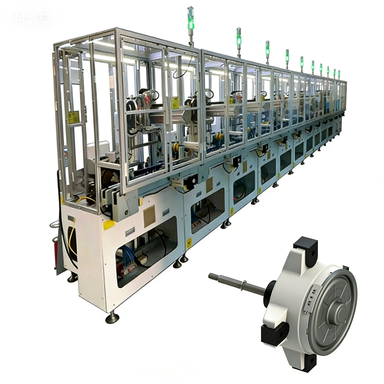
The market for BLDC motor winding machines has evolved significantly, driven by advances in precision engineering, digital control systems, and automation technology. Manufacturers now face an expanded range of options, from semi-automatic winding systems to fully integrated, digitally controlled platforms. Understanding how to evaluate these options based on your production volume, motor specifications, quality requirements, and budget constraints is fundamental to making an investment that delivers measurable returns over its operational lifetime.
Core Specifications and Technical Capabilities
Winding Accuracy and Precision Standards
The precision of BLDC motor winding machines directly determines the consistency and quality of wound coils. High-accuracy machines typically maintain winding tolerances within ±0.05 to ±0.1 millimeters, which is critical for achieving balanced magnetic fields and optimal motor performance. When evaluating BLDC motor winding machines, request detailed specifications on wire tension control, coil pitch accuracy, and layer-to-layer alignment capabilities. These technical parameters ensure that every coil produced meets strict electrical and mechanical specifications, reducing defects, minimizing rework, and improving overall product reliability in field applications.
Precision in BLDC motor winding machines also affects wire utilization efficiency. Machines with superior accuracy require less wire per coil due to reduced scrap and rework, directly lowering material costs. Additionally, consistent winding patterns reduce mechanical stress on wire insulation, extending motor lifespan and reducing field failures. Verify that any BLDC motor winding machines candidate includes real-time monitoring and feedback systems that track winding parameters and alert operators to drift or anomalies before they affect production batches.
Speed and Production Throughput
Production speed is a key differentiator among BLDC motor winding machines offerings. Modern machines can complete winding cycles ranging from 10 to 60 coils per hour, depending on coil complexity, wire gauge, and motor specifications. When assessing BLDC motor winding machines for your facility, calculate your required annual output and match it against machine speed ratings, accounting for changeover time, maintenance windows, and realistic uptime rates. A machine rated at 40 coils per hour may deliver only 30 coils per hour in continuous production when accounting for setup, cleaning, and minor adjustments.
Speed capabilities of BLDC motor winding machines must be evaluated alongside quality consistency. High-speed operation that compromises winding accuracy creates defective coils that waste materials and disrupt downstream assembly processes. The most reliable BLDC motor winding machines offer variable speed settings, allowing operators to balance production rate with quality requirements based on specific motor designs and customer specifications.
Automation, Control Systems, and User Interface
Digital Control and Programmability
Modern BLDC motor winding machines are built around advanced programmable logic controllers (PLCs) and touchscreen interfaces that simplify operation, reduce human error, and enable rapid product changeovers. Reliable BLDC motor winding machines should store dozens of winding profiles in memory, allowing operators to recall and execute complex specifications with a single selection. This capability is essential in facilities managing multiple motor designs or producing custom wound coils for different customers. Verify that the BLDC motor winding machines you evaluate include intuitive programming interfaces, comprehensive data logging, and the ability to export production records for quality audits and traceability compliance.
The control architecture of BLDC motor winding machines should also support integration with your existing Manufacturing Execution Systems (MES) or Enterprise Resource Planning (ERP) platforms. Machines capable of bidirectional communication enable real-time production visibility, automated material tracking, and predictive maintenance scheduling. This integration transforms BLDC motor winding machines from isolated equipment into networked production assets that contribute to whole-facility efficiency and data-driven decision making.
Maintenance Requirements and Spare Parts Availability
Long-term reliability and operational continuity of BLDC motor winding machines depend heavily on maintenance accessibility and spare parts availability. Before committing to any machine, research the vendor's track record for spare parts supply, average lead times, and maintenance support options. Reliable suppliers of BLDC motor winding machines maintain regional warehouses stocked with common wear components such as tension dies, wire guides, take-up frames, and control modules. Machines with standardized components and modular design reduce downtime when maintenance becomes necessary.
Request detailed preventive maintenance schedules for candidate BLDC motor winding machines and understand the labor hours and technical skill required for routine service. Machines designed for easy operator maintenance, with easily accessible components and clear diagnostic messages, typically deliver lower total cost of ownership. Additionally, verify whether the vendor offers remote diagnostic capabilities, allowing their technical team to troubleshoot issues and guide your staff without requiring on-site visits.
Vendor Evaluation and Long-Term Partnership Considerations
Technical Support and Training Infrastructure
The quality of vendor support significantly influences the success of your BLDC motor winding machines investment. Dependable vendors of BLDC motor winding machines provide comprehensive operator training, including hands-on sessions covering setup, programming, routine maintenance, and troubleshooting. Verify that training is delivered on-site at your facility and includes documentation tailored to your specific motor designs and production workflows. The best BLDC motor winding machines vendors maintain technical support hotlines, offer video tutorials, and provide detailed user manuals in your preferred language.
Beyond initial training, evaluate the vendor's commitment to ongoing technical support. Reliable suppliers of BLDC motor winding machines publish regular software updates that enhance functionality, address compatibility issues, and incorporate customer feedback. Some vendors offer tiered support plans, with premium packages including priority response times, on-site maintenance visits, and access to application engineering expertise. This support infrastructure becomes increasingly valuable as your team gains experience and seeks to optimize performance or expand capabilities on existing BLDC motor winding machines.
Warranty Coverage and Performance Guarantees
Warranty terms for BLDC motor winding machines vary significantly across vendors and reflect confidence in build quality and reliability. Standard warranties typically cover defects in materials and workmanship for 12 to 24 months from installation. However, comprehensive warranty coverage for BLDC motor winding machines should also address performance guarantees, including uptime commitments and productivity benchmarks. Some vendors offer extended warranties that cover wear items and aging components, providing predictability in maintenance costs over the machine's operational life.
When negotiating terms for BLDC motor winding machines, clarify whether warranties cover damage from normal production wear, operator misuse, or environmental factors such as dust, temperature, and humidity. Request detailed warranty documentation specifying covered components, exclusions, claim procedures, and response times. Transparent warranty terms for BLDC motor winding machines demonstrate vendor confidence and protect your investment against unexpected repair costs in the critical early operational years.
FAQ
What specifications matter most when choosing BLDC motor winding machines?
The most critical specifications are winding accuracy tolerances, production speed capability, wire tension consistency, and coil positioning precision. These factors directly affect motor performance and quality. Additionally, evaluate the control system's ability to store multiple winding profiles, provide real-time monitoring, and interface with your production management systems. Finally, verify that the BLDC motor winding machines can accommodate the wire gauges, coil sizes, and motor types your facility produces.
How do I assess reliability and durability of BLDC motor winding machines?
Reliability can be assessed by reviewing the vendor's warranty terms, researching customer references and industry reputation, and requesting detailed documentation on component quality, testing protocols, and failure rates. Ask about the Mean Time Between Failures (MTBF) for the specific machine model. Additionally, examine the design for durability—machines with hardened components, sealed bearing assemblies, and modular construction typically offer longer service life and lower maintenance costs than basic designs.
What should I consider regarding total cost of ownership for BLDC motor winding machines?
Beyond purchase price, calculate total cost of ownership by accounting for maintenance and spare parts, training and operator labor, energy consumption, production efficiency gains, and expected operational lifespan. Compare machines across a 5 to 10-year horizon to understand which options deliver the best value. Higher-priced machines with advanced features and superior reliability often cost less per unit of output than cheaper alternatives that require frequent repairs or produce lower quality results requiring rework.