
 EN



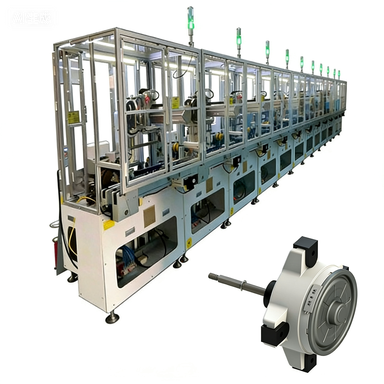
The demand for high-efficiency motors continues to grow across industrial, automotive, and consumer electronics sectors. BLDC motor winding machines represent a critical technological advancement in modern motor manufacturing, enabling manufacturers to produce brushless direct current motors with exceptional precision and consistency. These machines automate the complex process of winding coils onto motor stators, dramatically reducing production time while maintaining the exacting tolerances required for optimal motor performance. Understanding the capabilities and benefits of BLDC motor winding machines is essential for manufacturers seeking to remain competitive in an increasingly technology-driven market.
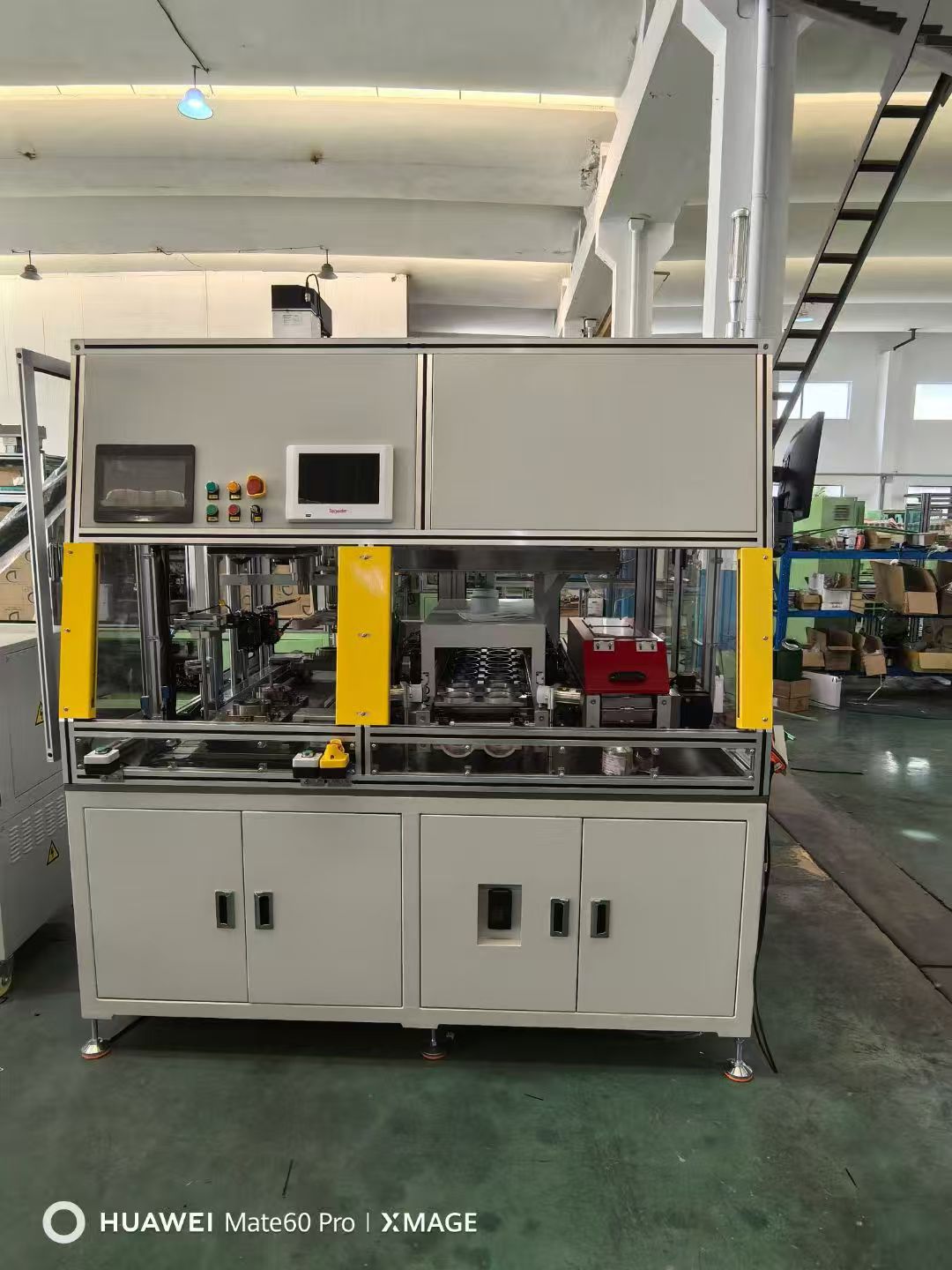
BLDC motor winding machines operate using advanced servo-controlled systems that guide wire precisely through stator slots with micron-level accuracy. The automation provided by BLDC motor winding machines eliminates manual handling inconsistencies, ensuring that every motor produced meets strict electrical and mechanical specifications. As manufacturers face pressure to deliver higher performance motors faster and more economically, BLDC motor winding machines have become indispensable equipment in modern production facilities worldwide.
Core Technology Behind BLDC Motor Winding Machines
Precision Control Systems
Modern BLDC motor winding machines incorporate sophisticated motion control technology that regulates wire tension, coil density, and winding speed with extraordinary precision. These systems utilize servo motors and PLC-based controllers to execute complex winding patterns while maintaining consistent wire routing through multiple stator slots. The precision offered by BLDC motor winding machines directly impacts the electromagnetic performance of finished motors, influencing torque ripple, efficiency, and heat generation. Real-time feedback systems continuously monitor wire position and tension, automatically adjusting parameters to maintain quality throughout extended production runs.
Automation and Flexibility
BLDC motor winding machines are engineered to accommodate various winding configurations, slot counts, and wire gauges without requiring extensive mechanical reconfiguration. Programmable software interfaces allow operators to quickly switch between different motor designs, reducing changeover time from hours to minutes. This flexibility makes BLDC motor winding machines valuable for manufacturers producing multiple motor variants or supporting small-batch custom orders. The modular design of many BLDC motor winding machines enables future upgrades and adaptation to emerging motor technologies.
Key Performance Benefits of BLDC Motor Winding Machines
Enhanced Motor Efficiency and Quality
BLDC motor winding machines produce windings with optimized geometry that reduces copper losses and improves overall motor efficiency. The consistent coil density and wire arrangement achieved through automated BLDC motor winding machines minimizes magnetic field distortion and reduces cogging torque. Manufacturers utilizing BLDC motor winding machines report reductions in motor vibration, noise, and thermal stress, resulting in products with longer operational lifespans. The superior quality of motors wound on BLDC motor winding machines directly translates to better performance in demanding applications.
Significant Production Efficiency Gains
Manual winding processes require skilled labor and produce highly variable results, whereas BLDC motor winding machines deliver consistent output rates with minimal defect rates. Production throughput increases by 300 to 500 percent when transitioning from manual to automated BLDC motor winding machines. Labor costs decrease substantially as BLDC motor winding machines require only setup and monitoring rather than continuous hands-on operation. The predictable production cycle times of BLDC motor winding machines enable manufacturers to better forecast delivery schedules and manage inventory efficiently.
Industry Applications and Market Relevance
Automotive and Electric Vehicle Manufacturing
Electric vehicle adoption drives massive demand for high-performance BLDC motors, and BLDC motor winding machines are essential for scaling production volumes while maintaining the performance standards required for demanding automotive applications. Electric power steering systems, brake actuators, and traction motors all rely on precisely wound BLDC motors, making BLDC motor winding machines critical infrastructure for automotive suppliers. The ability to quickly ramp production using BLDC motor winding machines provides manufacturers with competitive advantage in rapidly growing EV markets.
Industrial and Consumer Electronics Applications
HVAC systems, compressors, fan motors, and consumer appliances increasingly incorporate BLDC technology for improved energy efficiency and operational reliability. BLDC motor winding machines enable manufacturers to produce these motors at scales and costs that make BLDC adoption economically viable across consumer segments. Medical devices, robotics, and industrial automation systems similarly benefit from the quality improvements and cost reductions delivered by BLDC motor winding machines. The versatility of BLDC motor winding machines makes them valuable investments across diverse manufacturing sectors.
Implementation Considerations for Manufacturers
Capital Investment and ROI Analysis
BLDC motor winding machines represent significant capital equipment investments, typically ranging from mid-five to six-figure amounts depending on sophistication and throughput requirements. However, the return on investment calculation typically shows payback periods of 2 to 4 years based on labor savings, defect reduction, and production efficiency gains. Manufacturers should evaluate production volume requirements, product mix complexity, and long-term market forecasts when assessing the business case for BLDC motor winding machines. Strategic timing of BLDC motor winding machines acquisition can significantly impact overall manufacturing competitiveness and profitability.
Technical Integration and Workforce Adaptation
Successfully implementing BLDC motor winding machines requires technical expertise in machine programming, maintenance, and optimization. Manufacturers must invest in training programs to develop workforce capabilities in operating and troubleshooting BLDC motor winding machines. Integration with existing production systems, quality control processes, and supply chain management requires careful planning and coordination. Many manufacturers benefit from working with equipment suppliers who provide comprehensive implementation support, training, and ongoing technical assistance with BLDC motor winding machines.
FAQ
What specific advantages do BLDC motor winding machines provide compared to manual winding?
BLDC motor winding machines dramatically improve consistency, reduce defect rates to below 0.5 percent, increase output by 300 to 500 percent, and eliminate operator fatigue-related quality variations. Manual winding relies on individual skill, resulting in highly variable coil geometry and electrical performance, while BLDC motor winding machines maintain micron-level precision across every motor produced. The superior reproducibility of BLDC motor winding machines enables manufacturers to confidently meet tight performance specifications and customer requirements.
Can BLDC motor winding machines handle different motor designs and specifications?
Yes, modern BLDC motor winding machines feature programmable control systems that accommodate various stator configurations, slot counts, wire gauges, and winding patterns without major mechanical modifications. Software-based program libraries store configurations for multiple motor designs, allowing quick changeover through digital selection rather than physical reconfiguration. This flexibility makes BLDC motor winding machines suitable for manufacturers producing diverse motor variants or serving customers with custom requirements.
What maintenance requirements should manufacturers anticipate for BLDC motor winding machines?
BLDC motor winding machines require routine maintenance including servo motor lubrication, wire guide cleaning, tension sensor calibration, and PLC software updates to ensure optimal performance. Most manufacturers establish preventive maintenance schedules aligned with production volume, typically involving component inspection and calibration at regular intervals. Equipment suppliers generally provide detailed maintenance protocols and offer support services to maximize BLDC motor winding machines reliability and minimize unexpected downtime.