
 EN



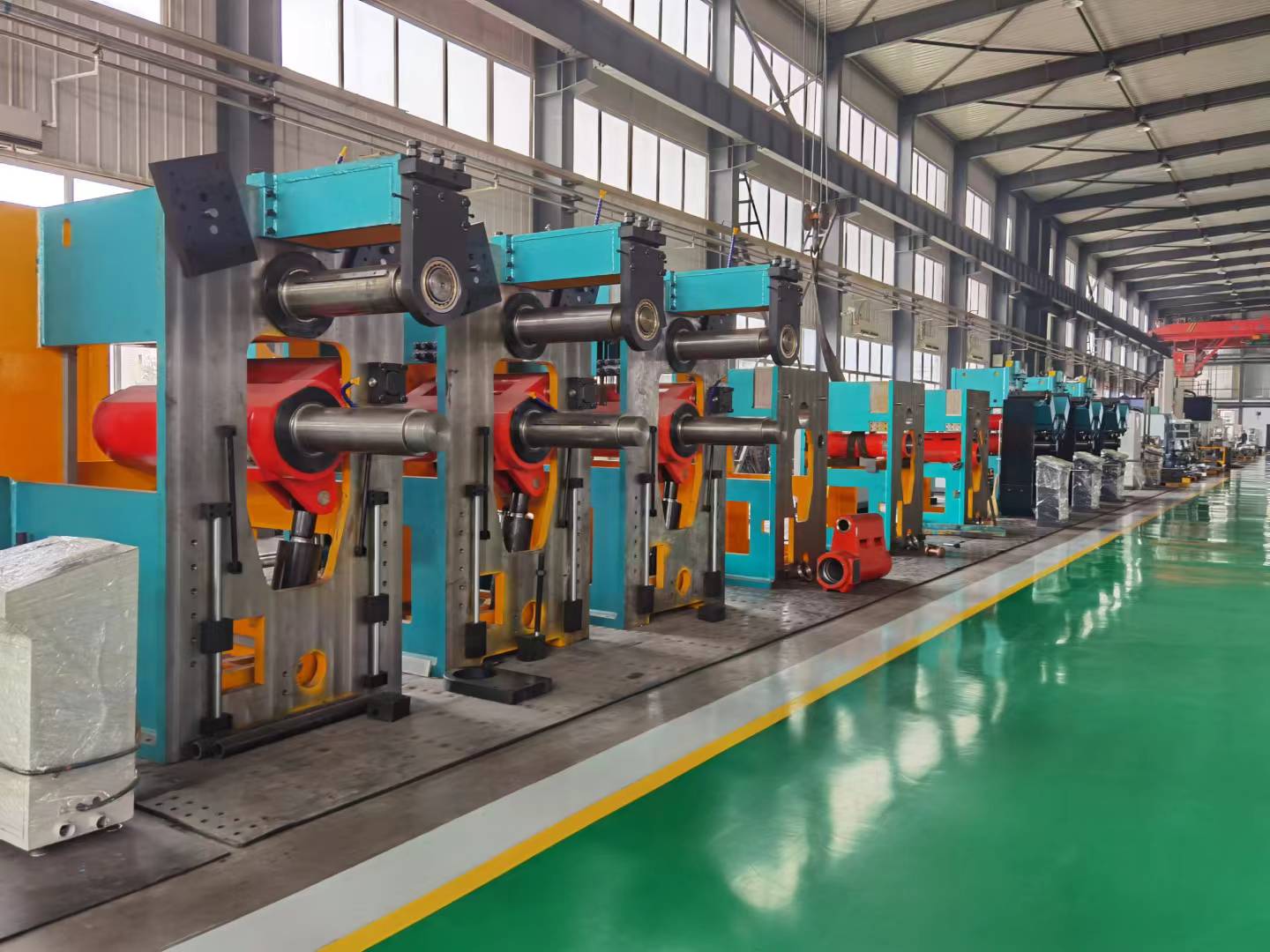
A wheel rim forming machine plays a foundational role in modern wheel manufacturing by shaping raw steel strip into precise, load-bearing rim profiles. The structural quality of a finished wheel depends heavily on how consistently and accurately the rim is formed during production. When manufacturers invest in a reliable wheel rim forming machine, they gain direct control over dimensional accuracy, material stress distribution, and overall rim geometry — all of which contribute to the structural integrity of the final product.
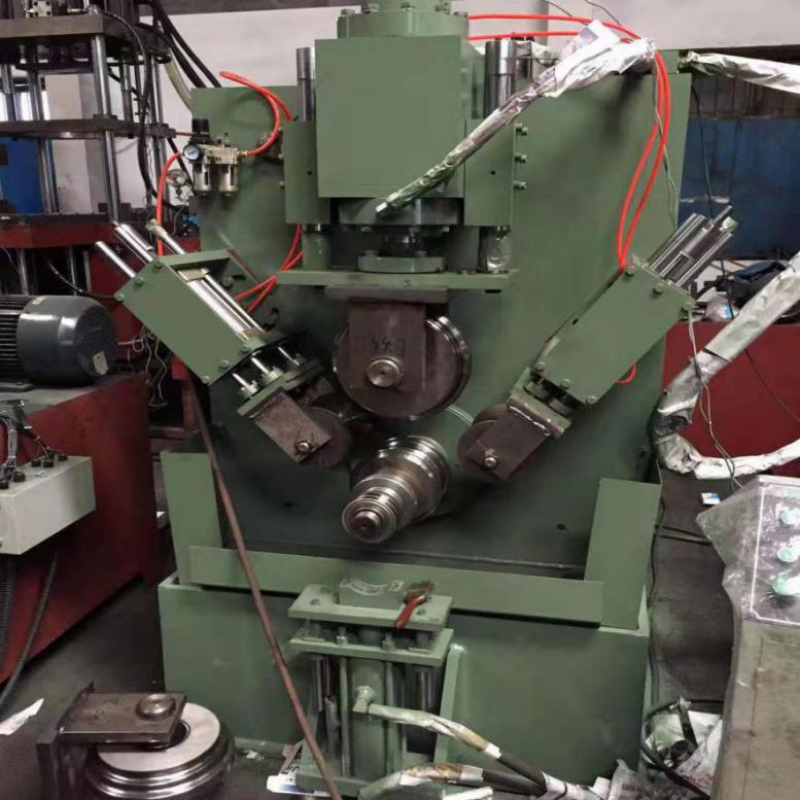
Structural integrity in wheels is not a cosmetic concern — it directly affects vehicle safety, load capacity, and service life. A wheel rim forming machine that delivers consistent forming pressure, uniform roundness, and controlled flange profiles ensures that every rim leaving the production line meets stringent performance standards. Understanding how a wheel rim forming machine achieves this outcome helps manufacturers make better equipment choices and process decisions.
How a Wheel Rim Forming Machine Shapes Structural Quality
The Forming Process and Material Behavior
The wheel rim forming machine works by progressively bending and rolling a flat or pre-cut steel strip through a series of roller stations. Each station in the wheel rim forming machine applies incremental deformation, guiding the material toward its final circular cross-section without introducing excessive stress concentrations. This progressive approach is critical because abrupt bending in a wheel rim forming machine can cause localized work-hardening, internal micro-cracks, or uneven wall thickness — all of which compromise structural integrity.
A well-engineered wheel rim forming machine controls the bending radius at every forming stage, ensuring that the steel yields gradually and evenly. When the wheel rim forming machine maintains consistent roller pressure and alignment, the resulting rim exhibits uniform grain flow in the steel, which directly translates to higher fatigue resistance and greater load-bearing capacity. Manufacturers who understand this relationship use the wheel rim forming machine not just as a shaping tool but as a structural quality control device.
Dimensional Precision and Roundness Control
One of the most important structural contributions of a wheel rim forming machine is achieving precise roundness and diameter consistency. Any deviation in rim roundness creates uneven contact between the rim and tire bead, leading to vibration, premature wear, and potential bead separation under load. A high-quality wheel rim forming machine uses precision-ground rollers, rigid machine frames, and controlled feeding systems to minimize these deviations across every production cycle.
The wheel rim forming machine also controls flange profile accuracy, which determines how securely the tire seats on the rim. When the wheel rim forming machine produces flanges with consistent height and angle, the tire-to-rim interface distributes lateral forces evenly, reducing the risk of structural failure during cornering or heavy loading. This level of dimensional control is what separates a structurally sound rim from one that merely looks finished.
Structural Benefits Delivered by the Wheel Rim Forming Machine
Uniform Wall Thickness Across the Rim
A properly configured wheel rim forming machine preserves the original thickness of the input steel throughout the forming process. Unlike stamping or forging approaches, the roll-forming method used in a wheel rim forming machine distributes deformation over a longer contact length, reducing thinning in critical zones such as the rim drop center and bead seat areas. Consistent wall thickness in a rim produced by a wheel rim forming machine means predictable stiffness and resistance to impact loads.
Manufacturers who operate a wheel rim forming machine optimized for wall thickness consistency report fewer rim failures during quality inspection and extended service life in field applications. The wheel rim forming machine achieves this by maintaining precise roller gap settings and ensuring that the steel strip enters the machine with uniform width and thickness. Process stability in the wheel rim forming machine directly supports structural reliability in the finished rim.
Weld Joint Integrity at the Rim Seam
After the wheel rim forming machine completes the roll-forming pass, the rim ends are joined by flash butt welding or another fusion welding process. The quality of this weld joint depends significantly on how accurately the wheel rim forming machine has aligned and sized the rim ends before welding. When the wheel rim forming machine produces ends that are geometrically matched in diameter, angle, and thickness, the weld joint achieves full-penetration fusion with minimal porosity or cold-weld defects.
A wheel rim forming machine with precise cut-off and end-preparation functions ensures that the rim enters the welding station in optimal condition. The resulting weld in a rim processed by a wheel rim forming machine behaves as a structural continuation of the parent material, rather than a weak point. This is particularly important for heavy-duty agricultural, industrial, and commercial vehicle rims where the weld seam experiences cyclical tensile and bending stresses throughout the service life.
Selecting a Wheel Rim Forming Machine for Structural Performance
Machine Rigidity and Roller Quality
When evaluating a wheel rim forming machine for structural output quality, machine rigidity is among the most critical factors. A wheel rim forming machine built on a rigid, welded steel frame with precision-bored roller housings minimizes deflection under forming loads, which directly preserves dimensional accuracy throughout long production runs. Operators selecting a wheel rim forming machine should examine roller material, hardness, surface finish, and the quality of the bearing assemblies supporting each roller shaft.
The adjustment systems on a wheel rim forming machine also matter for structural consistency. A wheel rim forming machine equipped with fine-pitch adjustment mechanisms and reliable locking systems allows operators to hold tight tolerances across shifts and material batches. This repeatability is what gives the wheel rim forming machine its structural value — not just in a single rim, but consistently across thousands of production cycles.
Process Integration and Quality Monitoring
Modern wheel rim forming machine installations benefit greatly from integrated process monitoring. Sensors that track roller force, strip tension, and rim diameter in real time allow the wheel rim forming machine to flag deviations before they propagate into finished rims. A wheel rim forming machine supported by closed-loop feedback systems can maintain forming parameters within tight windows even as material properties vary slightly between coil batches.
Integrating the wheel rim forming machine into a broader quality management workflow — including upstream coil inspection and downstream roundness gauging — creates a production environment where structural integrity is verified at every stage. The wheel rim forming machine becomes the centerpiece of a structurally focused manufacturing system rather than just a forming step.
FAQ
How does a wheel rim forming machine improve rim structural integrity?
A wheel rim forming machine improves structural integrity by applying progressive, controlled deformation that preserves material thickness, achieves precise roundness, and ensures consistent flange profiles. The wheel rim forming machine minimizes stress concentrations that would otherwise weaken the finished rim under load.
What steel grades are suitable for a wheel rim forming machine?
A wheel rim forming machine is typically configured for high-strength low-alloy steels, hot-rolled carbon steel strips, and specific rim steel grades defined by international standards. The wheel rim forming machine roller geometry and gap settings are adjusted to match the yield strength and thickness of each steel grade used.
Can a wheel rim forming machine handle multiple rim sizes?
Yes, a wheel rim forming machine designed with adjustable roller stations and quick-change tooling systems can produce rims across a range of diameters and widths. Operators reconfigure the wheel rim forming machine by changing roller sets and adjusting machine parameters to match each new rim specification.