Automatic Core Cutting Machine - Precision Cutting Solutions for Industrial Manufacturing

Get a Free Quote

Our representative will contact you soon.
Email
Name
Mobile/WhatsApp
Company Name
Message
0/1000

automatic core cutting machine

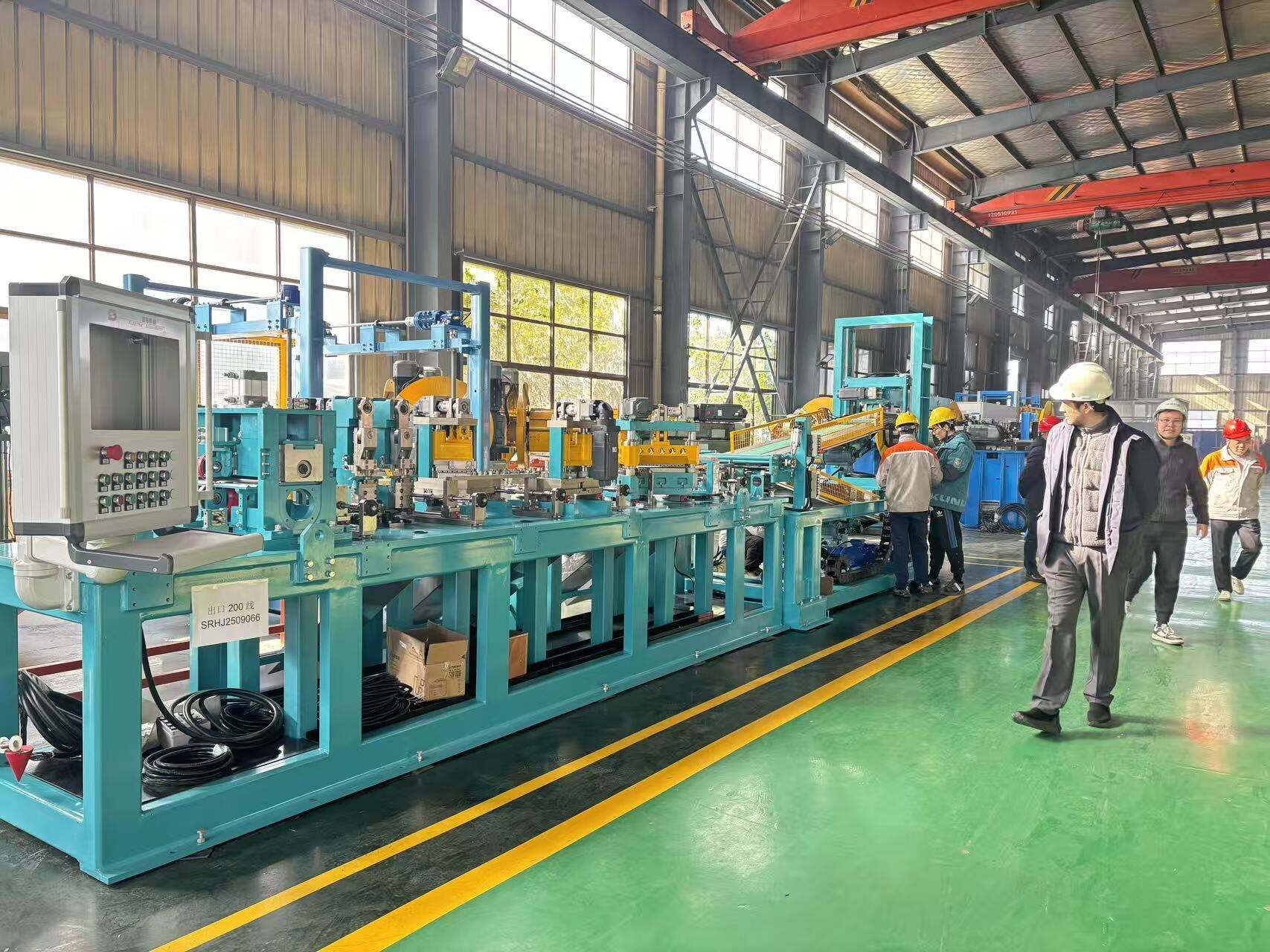
The automatic core cutting machine represents a significant advancement in manufacturing technology, designed specifically to streamline the process of cutting cores used in various industrial applications. This sophisticated equipment combines precision engineering with intelligent automation to deliver consistent, high-quality results while minimizing manual intervention. At its core, the machine utilizes advanced servo motor systems and programmable logic controllers that work in harmony to execute precise cutting operations with remarkable accuracy. The primary function of an automatic core cutting machine involves the automated slicing of tubular cores made from materials such as paper, plastic, or composite substances into predetermined lengths. These cores serve essential purposes across multiple industries, including paper production, textile manufacturing, film processing, and packaging operations. The technological features embedded within modern automatic core cutting machines include touch-screen control panels that allow operators to input specifications quickly, automatic feeding mechanisms that ensure continuous operation, precision blade systems engineered for clean cuts without material deformation, and intelligent sensors that monitor cutting quality in real-time. The machine's automation capabilities extend to material handling, where cores are automatically positioned, secured, and released after cutting, significantly reducing the need for manual labor. Safety features are comprehensively integrated, including emergency stop functions, protective guards, and automatic shutdown protocols when irregularities are detected. Applications for the automatic core cutting machine span numerous sectors where tubular cores are essential components. In the paper industry, these machines cut cores for toilet paper, paper towels, and industrial paper rolls. Textile manufacturers rely on them for producing cores used in fabric rolls and thread spools. The film and foil industries utilize these machines to create cores for plastic wrap, aluminum foil, and industrial films. Additionally, packaging companies depend on automatic core cutting machines to produce cores for adhesive tapes, labels, and protective materials. The versatility of these machines allows them to handle various core diameters, wall thicknesses, and lengths, making them adaptable to diverse production requirements across different manufacturing environments.

New Product Releases

The automatic core cutting machine delivers substantial practical benefits that directly impact your production efficiency and bottom line. First and foremost, this equipment dramatically increases production speed compared to manual cutting methods. Where traditional approaches might process dozens of cores per hour, an automatic core cutting machine can handle hundreds or even thousands, depending on specifications. This acceleration means you can fulfill larger orders in shorter timeframes, respond more quickly to customer demands, and ultimately increase your revenue potential without proportionally increasing labor costs. The precision offered by these machines ensures that every cut meets exact specifications, eliminating the variations that commonly occur with manual cutting. This consistency translates to fewer rejected pieces, reduced material waste, and improved product quality that enhances your reputation with customers. Your workers will appreciate the ergonomic benefits as well, since automation removes the physical strain and repetitive motions associated with manual core cutting. This reduction in physical demands leads to fewer workplace injuries, lower workers' compensation claims, and improved employee morale and retention. From a cost perspective, while the initial investment may seem significant, the automatic core cutting machine pays for itself through multiple avenues. Labor costs decrease substantially since one operator can oversee the machine while it performs work that would otherwise require multiple workers. Material waste reduction contributes to savings, as precise cuts mean less scrap and more usable products from each batch of raw materials. Energy efficiency is another advantage, with modern machines designed to optimize power consumption while maintaining high performance levels. Maintenance requirements are straightforward, with most machines featuring accessible components and clear service protocols that minimize downtime. The flexibility these machines provide cannot be overstated. Quick changeover capabilities allow you to switch between different core specifications with minimal setup time, enabling you to handle diverse orders without dedicated equipment for each variation. This versatility makes the automatic core cutting machine particularly valuable for businesses serving multiple markets or offering customized products. Quality control becomes more manageable as automated systems maintain consistent standards throughout production runs, reducing the need for intensive inspection processes. Your business gains competitive advantages through faster turnaround times, superior product consistency, and the capacity to accept larger contracts that manual operations simply cannot accommodate. The reliability of automated systems means predictable production schedules, allowing you to commit to delivery dates with confidence. Furthermore, modern automatic core cutting machines often include data logging capabilities that help you track production metrics, identify optimization opportunities, and demonstrate quality standards to clients. The safety enhancements protect your most valuable assets, your employees, while also reducing liability concerns. By investing in an automatic core cutting machine, you position your business for growth, operational excellence, and long-term profitability in an increasingly competitive manufacturing landscape.

Latest News

January 15th, 2026 Air Conditioner BLDC Motor Production line Dispatch to India

08

Apr

January 15th, 2026 Air Conditioner BLDC Motor Production line Dispatch to India

View More
August 30th, 2025, 45W Air conditioner ODU BLDC motor Assembly line Inspection From India customer

08

Apr

August 30th, 2025, 45W Air conditioner ODU BLDC motor Assembly line Inspection From India customer

View More
January 5th , 2026 CNC Coil Forming Machine For High Voltage Motors dispatched to UZ (Uzbekistan)

07

Apr

January 5th , 2026 CNC Coil Forming Machine For High Voltage Motors dispatched to UZ (Uzbekistan)

View More

Get a Free Quote

Our representative will contact you soon.
Email
Name
Mobile/WhatsApp
Company Name
Message
0/1000

automatic core cutting machine

Revolutionary Precision and Consistency That Transforms Production Quality

Revolutionary Precision and Consistency That Transforms Production Quality

The automatic core cutting machine distinguishes itself through its exceptional ability to deliver unwavering precision across thousands of cutting operations, a capability that fundamentally transforms production quality standards. Traditional manual cutting methods inevitably introduce human variables including fatigue, attention fluctuations, and physical limitations that result in dimensional inconsistencies between finished pieces. These variations, even when measured in mere millimeters, accumulate into significant quality issues that affect downstream manufacturing processes and final product performance. The automatic core cutting machine eliminates these concerns through advanced servo motor technology coupled with precision-engineered blade assemblies that execute each cut with micrometer-level accuracy. The machine's control system maintains exact positioning throughout every operation, ensuring that the first core cut in a production run matches the ten-thousandth with identical specifications. This remarkable consistency delivers multiple tangible benefits to manufacturing operations. Product quality becomes predictable and reliable, meaning customers receive materials that perform exactly as expected without variation between batches or shipments. When cores maintain uniform dimensions, they integrate seamlessly into automated production lines where tolerances are critical for proper equipment function. For example, in paper manufacturing, consistent core dimensions ensure smooth operation of high-speed winding machines, preventing jams, tears, or alignment issues that halt production and waste materials. The precision of automatic core cutting machines also optimizes material utilization by enabling tighter nesting patterns and reducing the safety margins manufacturers typically build into manual processes to accommodate variation. This improved material efficiency translates directly to cost savings and environmental benefits through reduced waste generation. Quality control processes become more efficient as well, since the predictable output from automatic core cutting machines requires less intensive inspection protocols. Rather than checking every piece or large sample sizes, operators can verify machine calibration periodically and confidently assume consistent quality throughout production runs. The technological foundation enabling this precision includes linear guide systems that eliminate play and vibration, digital measurement systems that provide real-time feedback, and intelligent software that compensates for blade wear or environmental factors. These integrated technologies work together seamlessly, creating a cutting environment where precision is not just a goal but a guaranteed outcome. For businesses competing in quality-sensitive markets, this level of consistency becomes a powerful differentiator that builds customer loyalty and enables premium pricing strategies.
Exceptional Speed and Efficiency That Maximizes Production Capacity

Exceptional Speed and Efficiency That Maximizes Production Capacity

Production speed represents one of the most compelling advantages of the automatic core cutting machine, fundamentally reshaping what manufacturers can accomplish within given timeframes and facility footprints. The performance differential between manual cutting approaches and automated systems is not incremental but transformational, often representing productivity improvements measured in multiples rather than percentages. Where manual operations might realistically produce fifty to one hundred cores per hour depending on specifications and operator skill, an automatic core cutting machine routinely processes five hundred to two thousand pieces in the same period, with some high-performance models exceeding even these impressive figures. This dramatic acceleration stems from multiple engineering innovations working in concert. The automatic feeding system continuously presents material to the cutting station without delays, eliminating the handling time that consumes significant portions of manual operation cycles. Pneumatic or servo-driven clamping mechanisms secure cores in microseconds rather than the several seconds required for manual positioning. Cutting blade systems operate at optimal speeds determined by material properties and desired finish quality, unconstrained by human reaction times or safety concerns that slow manual cutting. Perhaps most significantly, the automatic core cutting machine maintains this accelerated pace consistently throughout shifts, unaffected by the fatigue that inevitably reduces human productivity as hours progress. The cumulative effect of these speed advantages extends far beyond simple throughput numbers. Manufacturers gain the capacity to accept larger contracts that would be impossible with manual methods, opening new market opportunities and revenue streams. Lead times shrink dramatically, enabling businesses to differentiate themselves through rapid response capabilities that customers increasingly value in competitive markets. The ability to process materials quickly also reduces work-in-progress inventory requirements, freeing capital and floor space for other productive uses. Production scheduling becomes more flexible when operations can complete batches in hours rather than days, allowing manufacturers to accommodate rush orders or last-minute specification changes without disrupting established commitments. The efficiency extends to labor utilization as well, since one skilled operator can oversee the automatic core cutting machine while simultaneously managing quality checks, material preparation, or coordination activities that optimize overall workflow. This labor efficiency does not simply reduce costs but enables strategic reallocation of human talent to higher-value activities including process improvement, customer service, or specialized manufacturing tasks that truly require human judgment and expertise. Energy efficiency accompanies speed improvements, as modern automatic core cutting machines optimize power consumption relative to output, delivering better energy economics than the combination of manual labor, lighting, and ventilation required for equivalent manual operations. For growing businesses, the speed and efficiency of automatic core cutting machines provide scalability without proportional increases in facility size or workforce, enabling expansion within existing operational footprints and organizational structures.
Enhanced Safety Features and Operator Protection That Prioritize Workplace Wellbeing

Enhanced Safety Features and Operator Protection That Prioritize Workplace Wellbeing

The automatic core cutting machine incorporates comprehensive safety systems that fundamentally transform the risk profile of core cutting operations, protecting workers from hazards inherent in material processing while simultaneously improving operational confidence and regulatory compliance. Traditional core cutting methods expose operators to multiple danger points including rotating blades that can cause severe lacerations, repetitive motion patterns that lead to chronic musculoskeletal disorders, manual material handling that risks strain injuries, and sustained awkward postures that contribute to long-term health problems. These safety concerns translate into direct costs through workplace injury claims, indirect costs through productivity losses and replacement worker training, and regulatory risks including potential violations of occupational safety standards. The automatic core cutting machine addresses these concerns through multiple protective layers engineered into every aspect of machine design and operation. Physical guarding systems create barriers between operators and hazardous components, with interlocked access panels that automatically halt machine operation when opened, preventing accidental contact with moving parts during operation. Emergency stop controls are strategically positioned for immediate access, featuring large, distinctively colored buttons that enable instant shutdown when any safety concern arises. Advanced sensor arrays monitor the cutting zone continuously, detecting unexpected objects or conditions and triggering automatic safety responses faster than human reaction time allows. These sensors differentiate between normal operational variations and genuine hazards, maintaining productivity while providing reliable protection. The automation itself serves as a primary safety feature by removing operators from direct involvement with cutting processes, establishing physical and temporal separation between workers and danger zones. Material handling automation eliminates the lifting, carrying, and positioning activities that frequently cause workplace injuries, while ergonomic control station designs allow operators to work from comfortable positions without sustained reaching, bending, or twisting. The noise reduction achieved through precision engineering and sound dampening materials protects hearing health, creating a more pleasant work environment that reduces stress and improves focus. Safety benefits extend beyond immediate physical protection to encompass broader workplace health considerations. By eliminating repetitive manual cutting motions, the automatic core cutting machine prevents the cumulative trauma disorders that develop over months and years of repetitive work, protecting long-term worker health and reducing the hidden costs of chronic workplace injuries. The reduced physical demands enable a more diverse workforce, allowing businesses to retain experienced employees who might otherwise need to leave physically demanding manual positions, preserving institutional knowledge and reducing recruitment costs. Training for automated equipment operation emphasizes safety awareness and proper procedures, creating a culture of safety consciousness that extends throughout manufacturing operations. Comprehensive safety features also demonstrate organizational commitment to worker wellbeing, contributing to improved morale, enhanced retention, and positive employer reputation that aids recruitment efforts. From a compliance perspective, the robust safety systems integrated into automatic core cutting machines help manufacturers meet or exceed regulatory requirements established by occupational safety authorities, reducing audit concerns and potential penalties. Insurance providers often recognize superior safety profiles with reduced premium rates, creating ongoing financial benefits that complement the direct protection of workers. The psychological dimension of workplace safety should not be underestimated, as employees working with properly safeguarded automatic core cutting machines experience less stress and anxiety compared to those using manual methods with inherent dangers, contributing to better mental health, improved job satisfaction, and higher quality work output across all aspects of operations.

Get a Free Quote

Our representative will contact you soon.
Email
Name
Mobile/WhatsApp
Company Name
Message
0/1000