Comprehensive Quality Assurance With Integrated Testing and Traceability
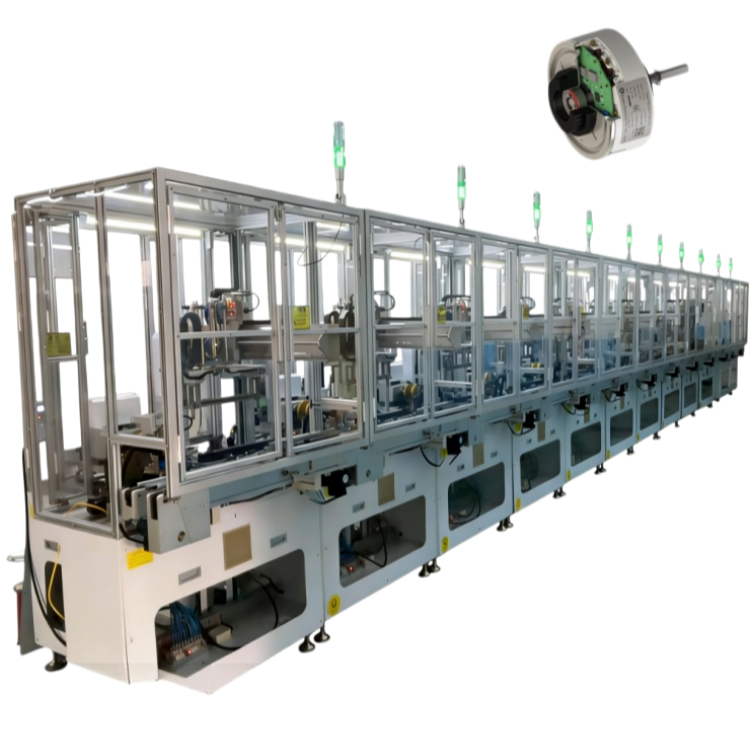
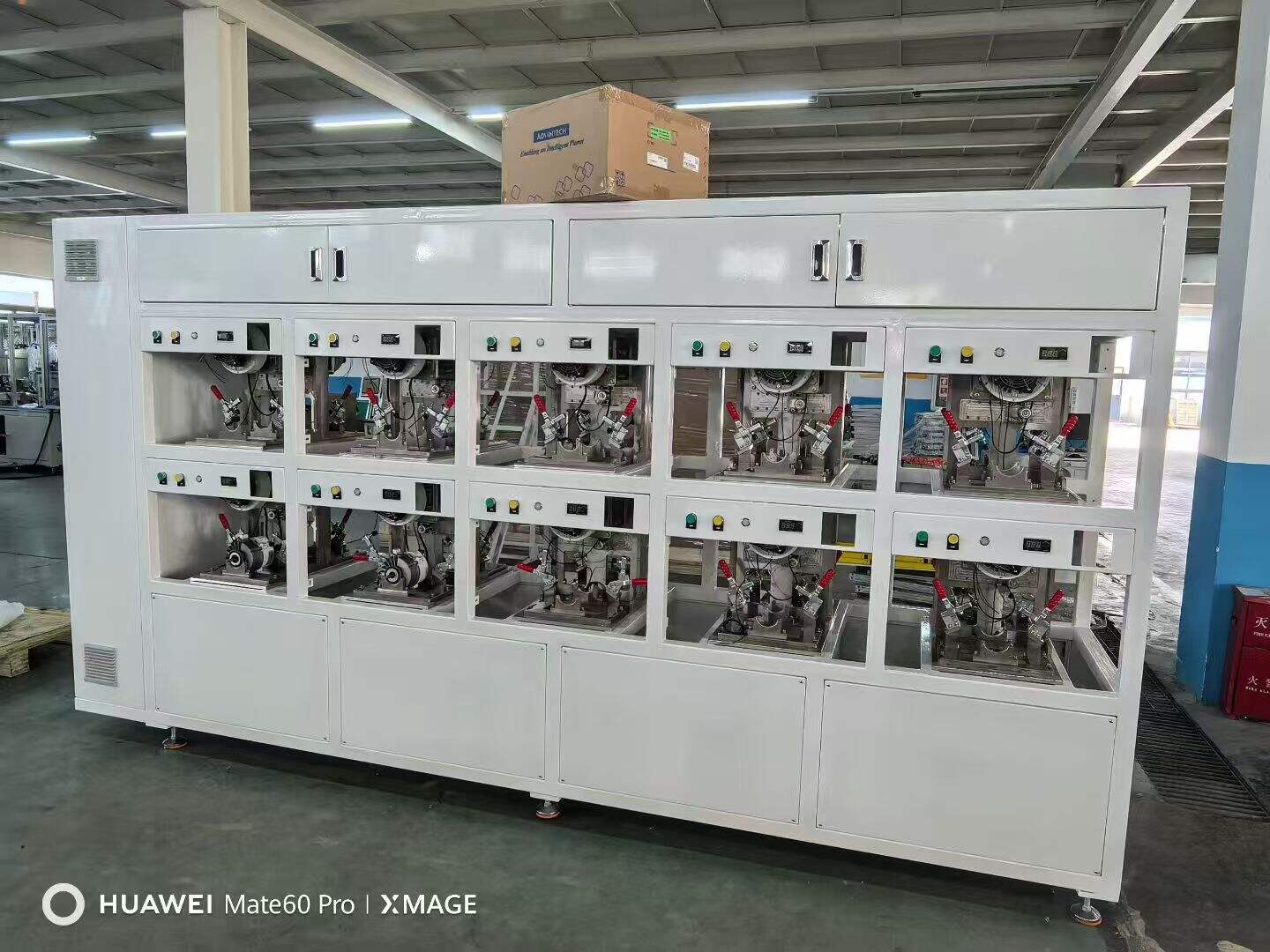
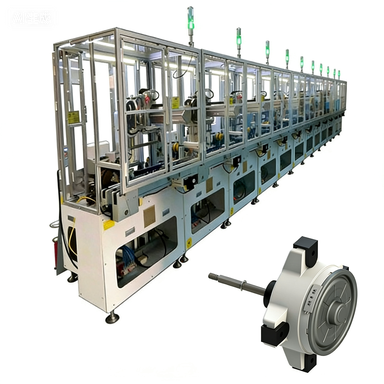
The brushless motor assembly system incorporates sophisticated quality assurance mechanisms that go far beyond simple pass-fail testing, providing comprehensive validation of every critical parameter while creating detailed traceability records that document the complete manufacturing history of each motor. This multi-layered approach to quality begins at the component feeding stage, where vision systems verify part presence, orientation, and condition before allowing them to enter the assembly sequence. Defective or incorrectly oriented components are automatically rejected, preventing them from contaminating the production stream and ensuring that only acceptable parts are incorporated into finished motors. As assembly progresses, the system continuously monitors critical operations, measuring torque values during fastening operations, verifying adhesive bead dimensions and placement, confirming proper seating of bearings and seals, and documenting each step with timestamp and result data. This real-time monitoring creates an immediate alert system that stops production if anomalies are detected, preventing the manufacture of defective units and allowing operators to address problems before they escalate. The integrated electrical testing station represents a particularly valuable quality assurance feature, subjecting each assembled motor to functional verification that measures resistance, inductance, back EMF characteristics, and insulation integrity. These electrical tests confirm that windings are correctly connected, insulation is adequate, and the motor will perform according to specifications when installed in its intended application. Motors that fail to meet electrical parameters are automatically diverted to a rejection bin, with detailed diagnostic data captured to assist in root cause analysis and process improvement. Beyond ensuring product quality, the system creates comprehensive traceability records that link each finished motor to the specific components used in its assembly, the exact date and time of manufacture, the operator on duty, the machine settings employed, and all quality test results obtained. This complete genealogy proves invaluable when investigating field failures, responding to customer inquiries, or demonstrating compliance with industry regulations and quality standards. In regulated industries like medical devices or aerospace, this documentation is not optional but mandatory, and the automated record-keeping provided by the assembly system ensures perfect compliance without imposing administrative burdens on production staff. The data collected also enables powerful analytics that reveal trends and patterns in manufacturing performance. Statistical process control algorithms identify gradual drifts in parameters before they result in out-of-specification products, predictive maintenance routines schedule interventions based on actual equipment condition rather than arbitrary time intervals, and production efficiency metrics highlight opportunities for cycle time reduction and throughput improvement. This intelligence transforms the brushless motor assembly system from a simple manufacturing tool into a strategic asset that drives continuous improvement and operational excellence.
 ×


 EN