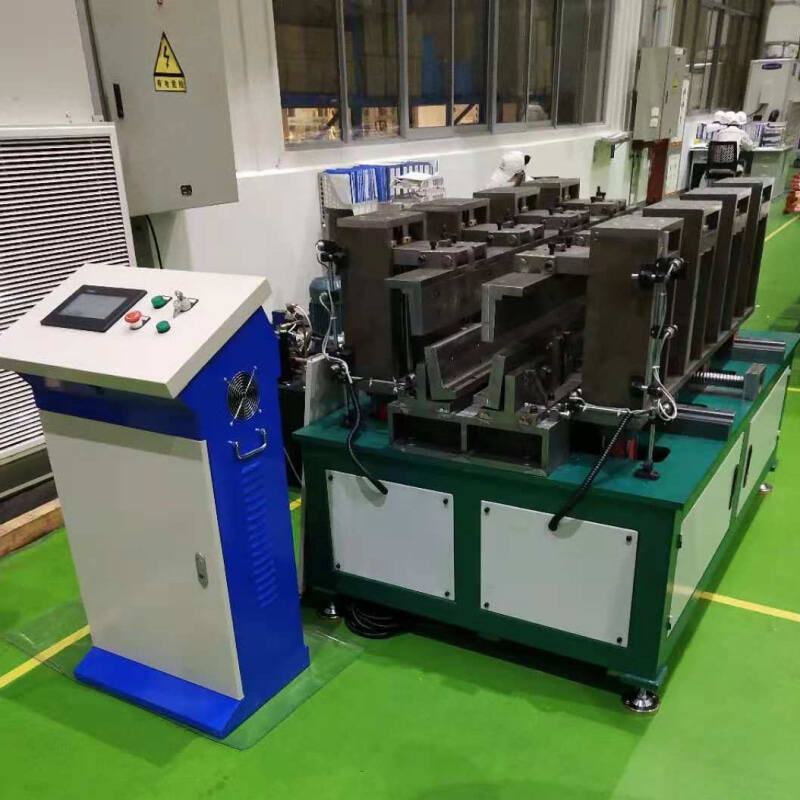
Carbon Fiber Prepreg Machine: Advanced Manufacturing Solutions for Superior Composite Production

Get a Free Quote

Our representative will contact you soon.
Email
Name
Mobile/WhatsApp
Company Name
Message
0/1000

carbon fiber prepreg machine

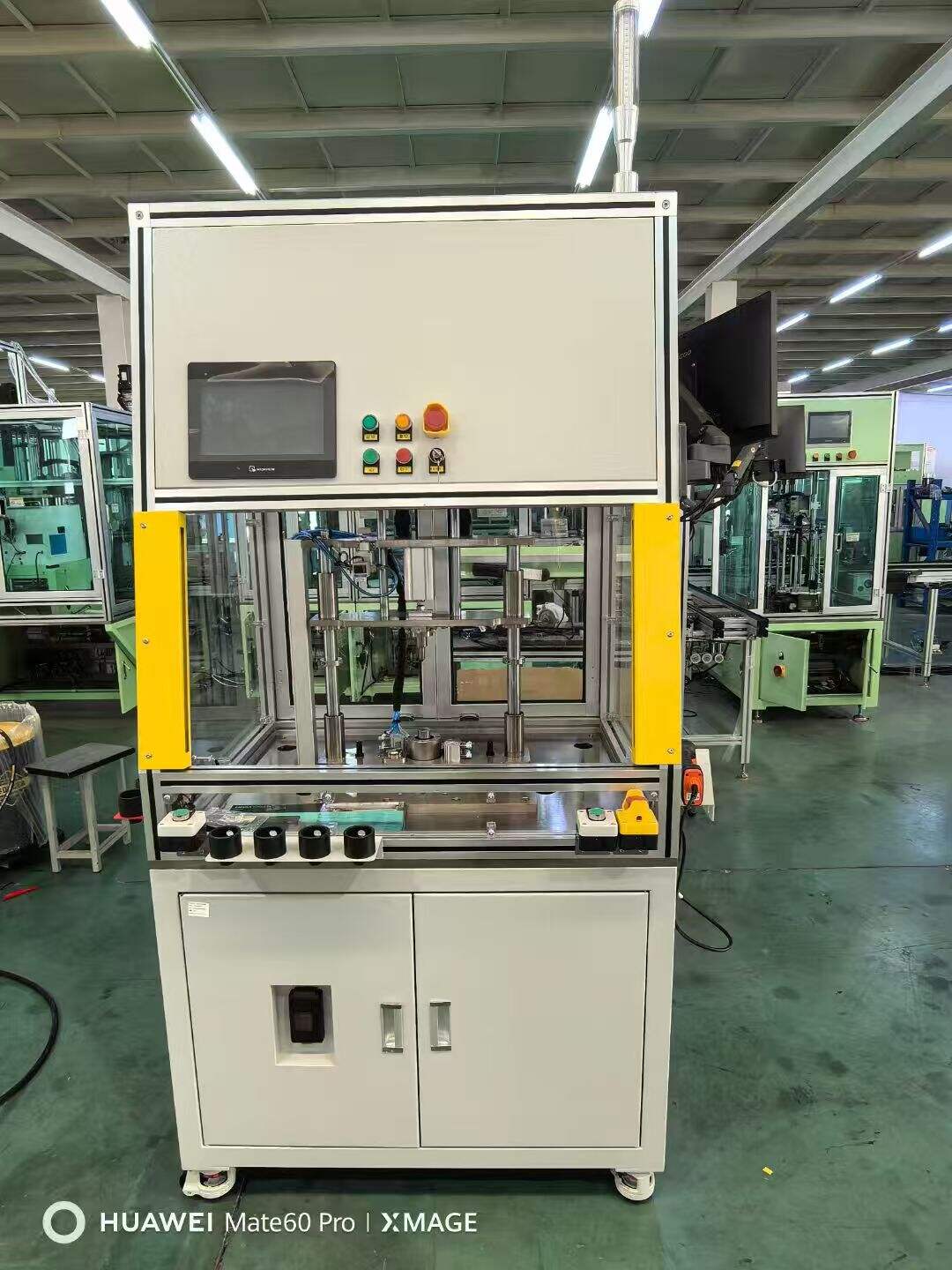
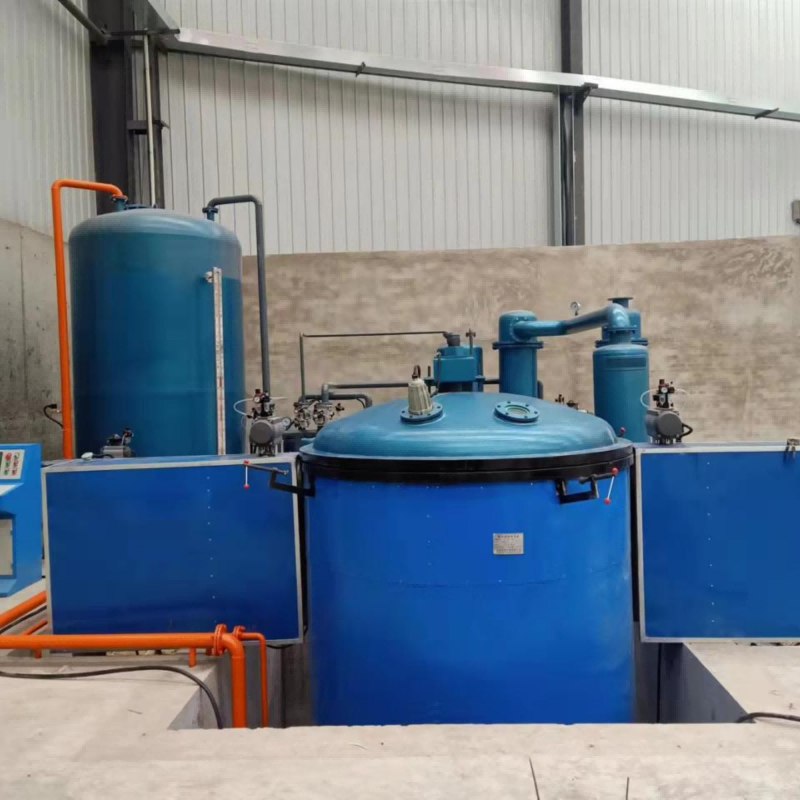
The carbon fiber prepreg machine represents a cornerstone technology in advanced composite manufacturing, designed to produce high-quality prepreg materials that combine carbon fiber reinforcement with precisely controlled resin systems. This sophisticated equipment automates the critical process of impregnating carbon fiber fabrics or tapes with thermosetting or thermoplastic resins, creating ready-to-use composite materials for demanding applications. The main functions of a carbon fiber prepreg machine include continuous fiber feeding, precise resin application through coating or hot-melt systems, controlled impregnation under specific temperature and pressure conditions, and automated winding or cutting of finished prepreg materials. Advanced models feature multi-zone heating systems that maintain optimal resin viscosity throughout the impregnation process, ensuring uniform distribution and consistent material properties. The technological features encompass programmable logic controllers that monitor and adjust processing parameters in real-time, tension control systems that prevent fiber damage or distortion, and cleanroom-compatible designs that eliminate contamination risks. Modern carbon fiber prepreg machines incorporate gravimetric feeding systems for accurate resin content control, infrared heating elements for rapid temperature response, and automated backing film application to protect the tacky prepreg surface. The applications of carbon fiber prepreg machines span multiple industries where lightweight strength and dimensional stability are paramount. Aerospace manufacturers rely on these machines to produce structural components for aircraft fuselages, wings, and tail sections. The automotive sector utilizes prepreg materials for electric vehicle battery enclosures, chassis components, and body panels that reduce vehicle weight while maintaining safety standards. Sporting goods manufacturers create high-performance bicycle frames, tennis rackets, and golf club shafts using machine-produced prepregs. Wind energy companies depend on consistent prepreg quality for turbine blade production, while marine industries fabricate hull components and masts. The medical device sector employs prepreg materials for prosthetics and diagnostic equipment housings. Electronics manufacturers use specialized prepregs for circuit boards and semiconductor processing equipment. This versatile equipment enables manufacturers to achieve repeatable quality, minimize material waste, and scale production efficiently while meeting stringent industry specifications and certification requirements across diverse market segments.

New Product Recommendations

Investing in a carbon fiber prepreg machine delivers substantial practical benefits that directly impact manufacturing efficiency and product quality. First and foremost, these machines dramatically improve consistency compared to manual impregnation methods. Every meter of prepreg material exhibits identical resin content, fiber orientation, and mechanical properties, which translates to predictable performance in finished parts and significantly reduces rejection rates during quality inspections. This consistency means manufacturers can confidently bid on contracts requiring tight tolerances and certification compliance without worrying about batch-to-batch variations that plague hand layup processes. The automation capabilities reduce labor costs substantially by eliminating the need for skilled technicians to manually wet out fabrics, a time-consuming task that requires extensive training and generates inconsistent results. A single operator can oversee machine production that would otherwise require multiple workers, freeing up personnel for value-added activities like engineering support or quality assurance. Material utilization improves dramatically because the machine applies precisely the amount of resin specified, avoiding the excess resin application common in manual processes that adds unnecessary weight and cost while compromising mechanical properties. This precision typically reduces resin consumption by fifteen to twenty-five percent, generating significant savings when working with expensive epoxy systems. Production speed increases substantially as machines operate continuously at speeds reaching several meters per minute, compared to manual processes that achieve only fractions of that throughput. This acceleration enables manufacturers to fulfill larger orders within shorter timeframes, improving cash flow and customer satisfaction while reducing work-in-process inventory costs. The enclosed processing environment protects materials from contamination by dust, moisture, and oils that degrade composite performance and cause delamination failures in service. This protection proves especially valuable when producing aerospace-grade materials subject to rigorous qualification testing where even minor contamination triggers costly material rejection. Temperature control systems maintain optimal processing conditions regardless of ambient factory conditions, ensuring summer production matches winter quality without seasonal adjustments to formulations or procedures. The machines accommodate various fiber formats including unidirectional tapes, woven fabrics, and spread tow materials, providing manufacturing flexibility to address diverse customer requirements without investing in multiple specialized systems. Digital process monitoring generates detailed production records that satisfy aerospace and automotive traceability requirements, documenting every processing parameter for each batch and enabling rapid root cause analysis if field failures occur years after production. Worker safety improves because operators avoid direct contact with uncured resins that may cause skin sensitization or respiratory irritation, and enclosed resin handling systems minimize volatile organic compound emissions that require expensive ventilation infrastructure and environmental permitting. The machines integrate seamlessly with upstream fiber preparation equipment and downstream autoclave or oven curing systems, creating efficient production cells that minimize material handling and reduce contamination risks during transfer operations. Return on investment typically occurs within two to four years through combined savings in labor, materials, and scrap reduction, while simultaneously expanding addressable markets through improved capability to serve quality-sensitive customers in regulated industries.

Latest News

January 15th, 2026 Air Conditioner BLDC Motor Production line Dispatch to India

08

Apr

January 15th, 2026 Air Conditioner BLDC Motor Production line Dispatch to India

View More
August 30th, 2025, 45W Air conditioner ODU BLDC motor Assembly line Inspection From India customer

08

Apr

August 30th, 2025, 45W Air conditioner ODU BLDC motor Assembly line Inspection From India customer

View More
January 5th , 2026 CNC Coil Forming Machine For High Voltage Motors dispatched to UZ (Uzbekistan)

07

Apr

January 5th , 2026 CNC Coil Forming Machine For High Voltage Motors dispatched to UZ (Uzbekistan)

View More

Get a Free Quote

Our representative will contact you soon.
Email
Name
Mobile/WhatsApp
Company Name
Message
0/1000

carbon fiber prepreg machine

Precision Resin Control Technology for Superior Material Properties

Precision Resin Control Technology for Superior Material Properties

The precision resin control technology integrated into modern carbon fiber prepreg machines represents a breakthrough advancement that fundamentally transforms composite material quality and performance characteristics. This sophisticated system employs gravimetric metering pumps coupled with real-time viscosity monitoring to deliver exactly the specified resin content with tolerances typically within plus or minus two percent of target values. Such precision proves absolutely critical because resin content directly determines the mechanical properties, curing behavior, and processing characteristics of the finished prepreg material. Too much resin creates heavy, resin-rich laminates prone to microcracking and reduced fiber volume fraction that compromises strength-to-weight ratios. Insufficient resin leaves dry spots where fibers lack complete wetting, creating stress concentrations that initiate premature failure under load. The control system continuously measures resin flow rates using Coriolis force meters that detect mass flow independent of temperature-induced viscosity changes, ensuring accuracy even as ambient conditions fluctuate throughout production shifts. Advanced machines incorporate closed-loop feedback where inline sensors measure the actual resin content of freshly impregnated material using beta ray absorption or capacitance measurement techniques, automatically adjusting pump speeds to correct any deviations before significant material waste occurs. This immediate correction capability prevents the production of off-specification material that would require costly disposal and schedule delays to reproduce. The temperature control subsystem maintains resin viscosity within the narrow window required for complete fiber wetting without excessive flow that would create resin-starved edges or non-uniform distribution. Multi-zone heating elements allow independent control of different process stages, with cooler zones during initial fiber spreading to prevent premature resin advancement, warmer zones during impregnation to reduce viscosity for penetration into fiber bundles, and controlled cooling zones that increase tack for subsequent handling operations. For thermoplastic prepregs, the system achieves the elevated temperatures required to melt polymer matrices while precisely controlling residence time to prevent thermal degradation that would compromise mechanical properties. The practical benefits for customers manifest in multiple ways that directly impact profitability and competitive positioning. Aerospace customers achieve first-time qualification success because material properties remain within specification limits across entire production runs, eliminating the expensive and time-consuming requalification cycles triggered by process variations. Automotive manufacturers reduce prototype iteration cycles because parts made from machine-produced prepreg exhibit predictable spring-back and curing shrinkage, allowing accurate tool compensation on initial builds rather than costly trial-and-error refinement. Sporting goods producers deliver consistent product performance that builds brand reputation, as every tennis racket or bicycle frame exhibits identical stiffness and vibration damping characteristics that athletes depend upon. The enhanced material consistency enables lightweighting initiatives where engineers confidently specify thinner laminates knowing the material will reliably deliver design properties without the safety factors required to accommodate process variability. This weight reduction translates directly to improved fuel efficiency in transportation applications and enhanced performance in recreational products where every gram matters to competitive athletes seeking marginal advantages.
Automated Production Efficiency That Transforms Manufacturing Economics

Automated Production Efficiency That Transforms Manufacturing Economics

The automated production efficiency delivered by carbon fiber prepreg machines fundamentally restructures the economics of composite manufacturing, enabling businesses to scale operations profitably while maintaining the quality standards demanded by premium market segments. Unlike manual prepreg production that requires skilled technicians performing repetitive tasks with inherent variability and fatigue-related quality degradation, automated systems operate continuously at consistent speeds with unwavering precision from first shift through third shift operations. The machines process material at speeds ranging from two to fifteen meters per minute depending on fabric weight and resin system, representing throughput improvements of five to ten times compared to manual methods that typically achieve only fractions of a meter per minute even with experienced operators. This dramatic speed increase enables manufacturers to fulfill production volumes previously requiring multiple manual stations with a single automated line, concentrating production in less floor space while reducing overhead allocation per unit. The continuous operation capability means production runs extending across multiple shifts without the setup time and material waste associated with stopping and restarting manual processes where partially wetted materials must be discarded. Modern machines feature quick-change systems for switching between different fiber types, widths, or resin formulations with changeover times measured in minutes rather than hours, maximizing productive uptime and enabling economical production of smaller batch sizes that serve niche applications. The automated tension control systems prevent the fiber damage and distortion that plague manual handling, where inconsistent pulling forces create wavy fibers that compromise mechanical properties and aesthetic appearance in visible applications. Precise tension maintenance ensures fibers remain straight and uniformly distributed across the material width, maximizing reinforcement efficiency and enabling thinner laminates that achieve equivalent strength with less material cost. The machines incorporate automated defect detection using optical inspection systems that identify contamination, resin-starved areas, or fiber misalignment in real-time, automatically marking affected sections for removal rather than allowing defective material into production where it would cause expensive part rejection during final inspection. This inline quality assurance dramatically reduces scrap rates at the part fabrication stage, where the material cost combines with labor and tooling expenses to create rejection costs five to twenty times higher than raw prepreg material value. Labor productivity improvements extend beyond direct operation to encompass upstream and downstream activities, as consistent material properties simplify lamination scheduling, reduce autoclave cycle variations, and minimize post-cure inspection requirements. Manufacturers report labor cost reductions of forty to sixty percent per unit when transitioning from manual to automated prepreg production, with savings increasing for higher volume production where fixed equipment costs amortize across larger output quantities. The digital process control systems generate comprehensive production data that enables continuous improvement initiatives, identifying optimization opportunities that further enhance efficiency over time. Customers benefit from shorter lead times as manufacturers fulfill orders more rapidly, improved on-time delivery performance that simplifies supply chain planning, and often lower piece prices as efficiency savings transfer partially to customers through competitive market dynamics. For manufacturers, the improved economics enable pursuit of price-sensitive market segments previously uneconomical with manual production methods, expanding addressable markets and increasing facility utilization rates that spread fixed costs more effectively. The combination of higher throughput, lower labor requirements, reduced scrap rates, and improved quality consistency creates compelling return on investment that typically justifies equipment acquisition even for medium-volume applications where automated solutions previously appeared economically marginal.
Versatile Multi-Format Capability Serving Diverse Application Requirements

Versatile Multi-Format Capability Serving Diverse Application Requirements

The versatile multi-format capability engineered into advanced carbon fiber prepreg machines provides manufacturers with exceptional flexibility to serve diverse customer requirements and application specifications using a single production platform, eliminating the need for multiple specialized systems that consume valuable floor space and capital resources. These adaptable machines accommodate various fiber formats including unidirectional tapes ranging from narrow twenty-five millimeter widths used for filament winding applications up to broad two-meter widths for aerospace fuselage panels, woven fabrics in plain, twill, and satin weave patterns that provide balanced properties and drapability for complex contours, and innovative spread tow materials where fiber bundles are flattened to create ultra-thin reinforcements for high-performance applications. The resin systems compatibility extends across thermosetting chemistries including standard epoxies, toughened epoxy formulations with rubber or thermoplastic modifiers for damage tolerance, high-temperature bismaleimides and polyimides for engine components, phenolics for fire-critical applications, and cyanate esters for radome applications requiring low dielectric properties, plus increasingly important thermoplastic matrices including PEEK, PPS, and PA compounds that enable out-of-autoclave consolidation and potential recyclability. This broad material compatibility empowers manufacturers to respond quickly to customer specifications without the delays and risks associated with qualifying new production methods, providing competitive advantage in rapidly evolving markets where material technology advances continuously. The machines feature adjustable process parameters including independent control of multiple heating zones spanning ambient to four hundred degrees Celsius for thermoplastic processing, variable line speeds accommodating different resin viscosities and fiber formats, and programmable impregnation pressure settings that optimize resin penetration for different fabric architectures from tight weaves requiring higher pressure to open weaves needing gentle treatment to prevent distortion. Width adjustment capabilities allow processing materials from laboratory-scale fifty millimeter samples used for material development through full-production widths, enabling research and development activities on production equipment that ensures prototype materials accurately represent production characteristics rather than introducing scale-up risks when transitioning from lab equipment. The backing film systems accommodate various release papers, thermoplastic films, and specialized liners depending on downstream processing requirements, with automatic splice detection and handling that prevents process interruptions when film rolls require changing during continuous production runs. Advanced machines incorporate modular designs where different impregnation methods can be installed on the same base platform, offering options including solution coating where resin dissolved in volatile solvents is applied and subsequently dried, hot-melt coating where solid resin films are melted and laminated onto fibers, and direct liquid impregnation using metering rollers or coating dies. This modularity enables manufacturers to select the optimal impregnation method for specific resin systems and fiber formats, then reconfigure the equipment as product mixes evolve without replacing the entire machine. The practical advantages for customers manifest through improved responsiveness to custom requirements, shorter quotation-to-delivery cycles as manufacturers confidently quote diverse specifications knowing their equipment can deliver, and access to broader material options that enable performance optimization rather than accepting compromises imposed by supplier production limitations. Manufacturers serving aerospace markets particularly value this versatility because certification programs often specify exact material forms and processing conditions that vary between aircraft models and component locations, requiring production flexibility to maintain sole-source supplier status for multiple programs simultaneously. Automotive manufacturers benefit when launching new vehicle platforms where early prototypes may use different materials than production vehicles, allowing suppliers to support development programs without maintaining separate production lines. The versatility also enables manufacturers to pursue opportunities in multiple market segments, reducing business risk through diversification while leveraging existing equipment investments rather than requiring vertical market specialization that increases vulnerability to industry cyclicality. Research institutions and material developers particularly appreciate multi-format capability because it enables systematic studies of how fiber architecture and resin chemistry influence prepreg properties and processing behavior, accelerating innovation cycles that develop next-generation materials. The investment in versatile equipment typically delivers superior long-term value compared to specialized single-purpose machines because it accommodates evolving product mixes without obsolescence risks, maintains utilization rates as market demands shift between applications, and provides strategic flexibility to pursue emerging opportunities as composite materials penetrate new industries seeking lightweighting and performance enhancement solutions.

Get a Free Quote

Our representative will contact you soon.
Email
Name
Mobile/WhatsApp
Company Name
Message
0/1000